Jesus Didn’t Want Mindless Followers — He Wanted Thinkers
Blog post description.Did Jesus expect people to simply accept religious tradition without question? Or did He intentionally teach in ways that forced people to think deeply about truth? In this video/article, we explore how Jesus used parables, questions, and figurative language to challenge assumptions and awaken understanding. From the Good Samaritan to His conversations with religious leaders, Jesus consistently pushed listeners beyond surface-level belief into personal conviction. We’ll also look at how the rest of Scripture calls believers to love God with their minds, test what they hear, and search the Scriptures for themselves. Faith was never meant to be passive. Discover why the Master Teacher still calls His followers to think.
William Neal Craig, Doctor of Ministry (D.Min.) Candidate in Theology and Apologetics, Liberty University, John W. Rawlings School of Divinity
2/9/20264 min read

Beyond Blind Tradition: Why the Master Teacher Wants You to Think
Many people turn to the Bible looking for quick answers, simple rules, easy formulas, and clear conclusions. But if we look at how Jesus taught, we find something much deeper. Jesus did not want followers who just memorized religious phrases. Instead, He inspired curiosity, challenged people’s hearts, and encouraged them to seek the truth for themselves.
He did not want people to follow traditions without thinking. He wanted them to truly understand and believe from the heart.
Jesus Challenged the Religious Status Quo
Throughout His ministry, Jesus met people who knew all the religious traditions but missed the true meaning of God’s message. For example, Nicodemus was a respected teacher in Israel, but he was confused when Jesus talked about being “born again.” He had plenty of knowledge, but he did not really understand.
In the Sermon on the Mount, Jesus repeatedly said,
“You have heard it said… but I say to you…”
With these words, Jesus did not reject Scripture. Instead, He showed how human traditions had made its meaning unclear. He encouraged people to think about what they believed and why.
He was not trying to limit people’s thinking. He wanted to help them open their minds.
The Two Ways Jesus Taught
Jesus used two main teaching styles:
1. Plain, Direct Teaching
At times, Jesus spoke clearly and directly:
“Love your enemies.”
“You must be born again.”
“I am the way, the truth, and the life.”
These statements are clear and spoken with authority.
2. Figurative, Thought-Provoking Teaching
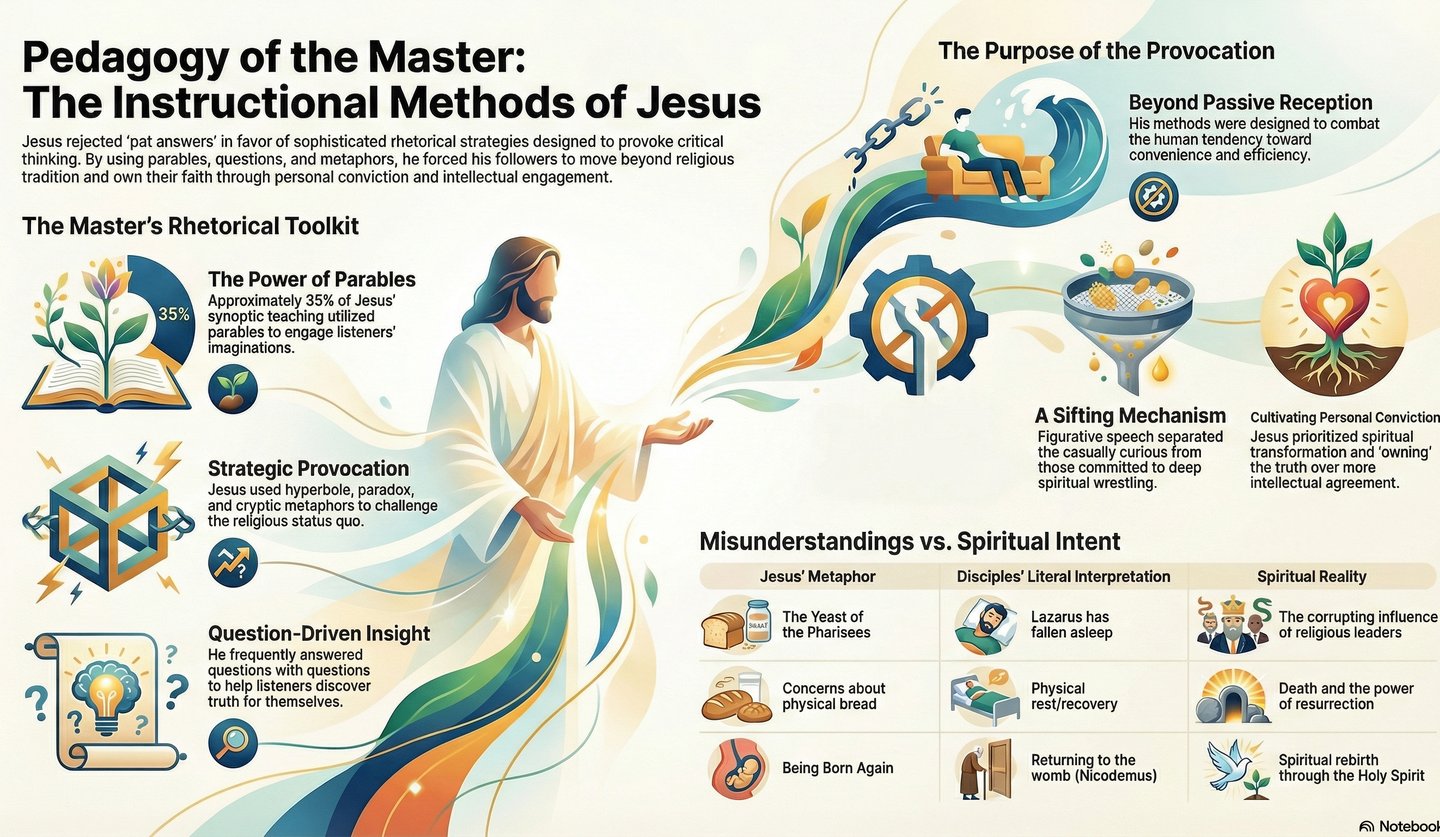
More often, Jesus used parables, metaphors, and strong images in His teaching. He talked about seeds, vineyards, lost coins, and wandering sheep. These stories were not meant to confuse people, but to invite them to think more deeply.
When Jesus taught with stories and symbols, He wanted people to stop, think, and look for meaning. He did not just give out simple answers. Instead, He offered truth like a hidden treasure for people to find.
Why Jesus Taught This Way
Jesus’ use of parables served multiple purposes:
To reveal truth to seekers
Those who genuinely wanted to understand would press in and learn more.To conceal truth from the hardened
Those who had already rejected Him heard only stories.To create personal conviction
Instead of just repeating what others said, people were encouraged to come to their own conclusions.
When Jesus asked His disciples,
“Who do you say that I am?”
He guided them to move beyond what everyone else thought and to develop their own personal faith.
The Good Samaritan: An Expert Lesson in Making People Think
The parable of the Good Samaritan is a great example of how Jesus taught.
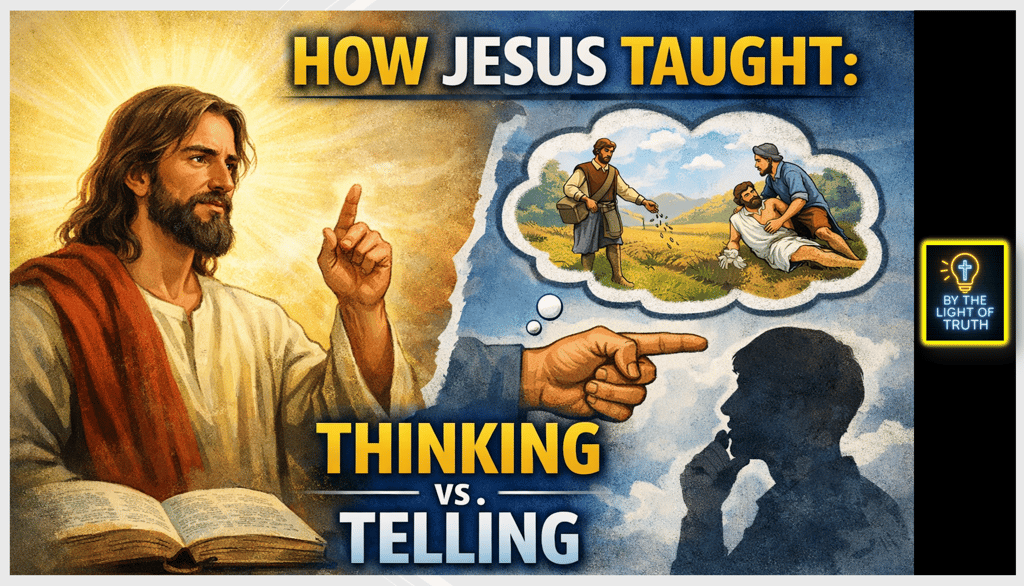
A lawyer asked Jesus, “Who is my neighbor?” Instead of giving a doctrinal definition, Jesus narrated a story. In that story, a despised Samaritan, not the religious leaders, showed true compassion.
Then Jesus asked the lawyer a question:
“Which of these three do you think was a neighbor?”
This was a powerful way to teach. Jesus:
Shifted the focus from theory to real-life mercy
Used a story that couldn’t be easily argued away
Forced the listener to reach his own conclusion
Challenged deeply held social and religious prejudices
The lawyer had to answer for himself. In that moment, the truth became personal instead of just an idea to argue about.
Jesus Was Not the Only One
This method of awakening the mind runs throughout Scripture.
Nathan confronted David with a parable (2 Samuel 12)
Proverbs uses graphic imagery to teach wisdom
God says, “Come now, let us reason together” (Isaiah 1:18)
Paul uses allegory and illustration in his letters
God’s messengers always used words that made people think, not just accept things without question.
A Holy Mandate for the Mind
The Bible repeatedly commands believers to activate their minds:
Love God with all your mind (Matthew 22:37)
Judge with righteous judgment (John 7:24)
Test all things (1 Thessalonians 5:21)
Test the spirits (1 John 4:1)
The Bereans were called “noble” because they searched the Scriptures daily to verify what they were taught (Acts 17:11).
God never wants His people to stop thinking. He calls them to use their minds carefully and honestly.
The Danger of Passive Faith
It can be easy to let others decide what we believe. But faith that is not our own is weak. If we never question or think about our beliefs, they may fall apart when tested. Jesus confronts laziness head-on. He asked probing questions, told stories, and challenged assumptions. He expected His followers to move beyond surface understanding and grow into mature discernment.
Faith is not about turning off your mind. It means using your mind to fully engage with the truth.
Should Christians Teach This Way?
Jesus’ example shows that believers today can use good questions, clear examples, and stories to help others grow. Teaching that makes people think often leads to deeper and lasting understanding. Not every truth has to be taught like a lecture. Sometimes, the best lessons happen when someone is gently helped to find the answer on their own.
Conclusion: The Master Teacher Still Calls Us to Think
Real spiritual growth often comes from the harder path of discovering things for yourself; we learn more in the valleys than on the mountain tops. Jesus does not want followers who just accept beliefs from others. He wants disciples who understand why they believe.
So when you read your Bible, do not be satisfied with just finding a rule to follow.
Look for the questions God is asking you to consider.
Interact with what you read. Think carefully about it. Ask God for understanding.
Jesus is not just someone who gives out information.
He is the Master Teacher, inviting you to love God with both your heart and your mind as you embark on a lifelong journey of discovery.