Walking in the Light


The Final Four: Deciphering the Prophetic Architecture of Revelation
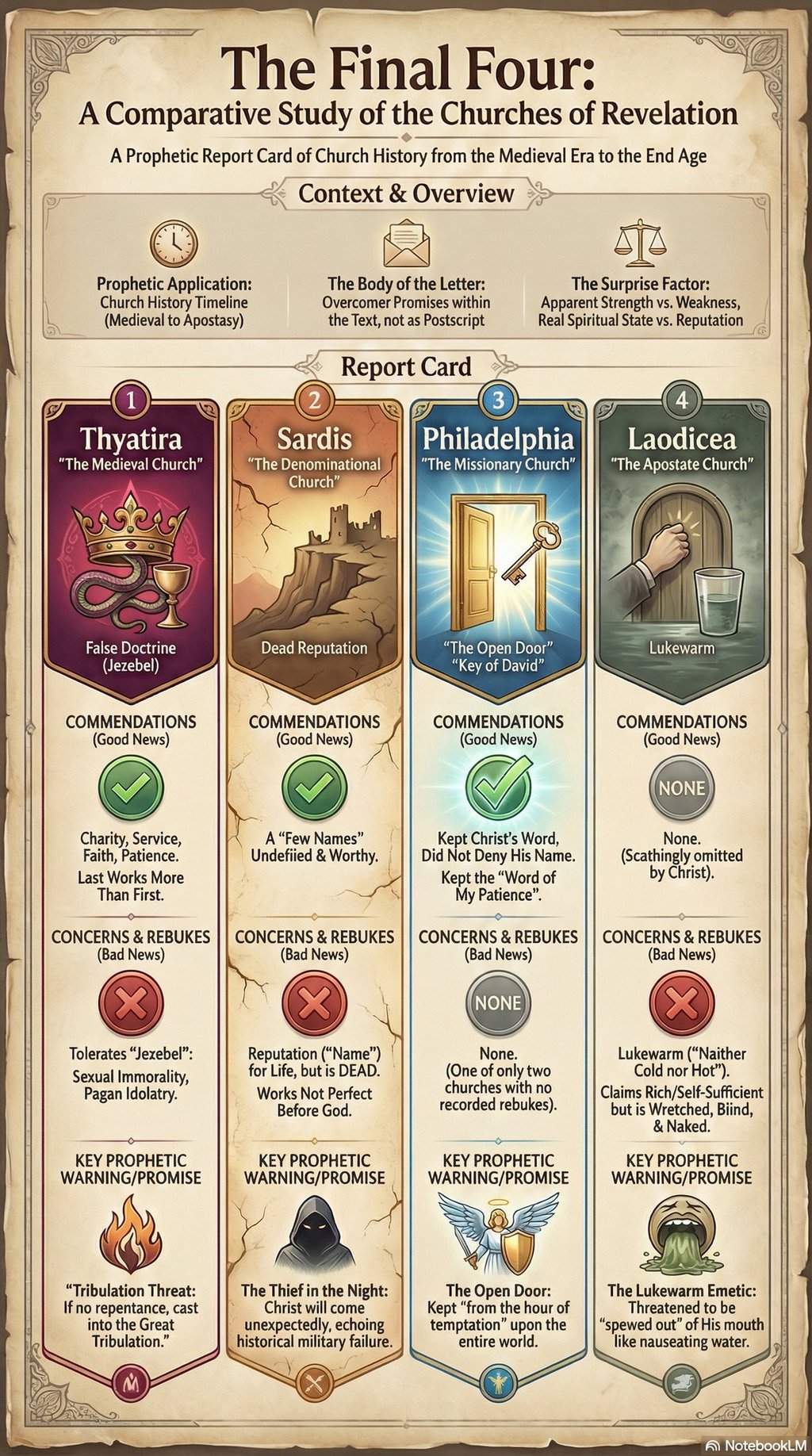
Podcast Description: In this episode, we explore the dramatic shift that occurs in the final segments of the "seven letters" to the churches in the book of Revelation. While the first three letters address the early phases of church history, the final four—Thyatira, Sardis, Philadelphia, and Laodicea—carry a distinct prophetic weight, containing explicit references to the Second Coming of Jesus Christ. We examine the unique structural reversal found in these letters, where the promise to the "overcomer" is moved from a postscript position into the body of the message, signaling a change in how Christ addresses the faithful amid increasing spiritual decline.
We dive deep into the historical and spiritual profiles of these four assemblies:
• Thyatira (The Medieval Church): Characterized by outward vitality and works, yet rebuked for tolerating the seductive and immoral doctrines of a prophetess named Jezebel.
• Sardis (The Denominational Church): A church with a reputation for being alive but declared spiritually dead by Christ, warned that He will arrive "as a thief in the night" unless they strengthen the things that remain.
• Philadelphia (The Missionary Church): The assembly of "little strength" that has remained loyal to Christ’s word and is granted a specialized promise of protection from the "hour of temptation" coming upon the whole world.
• Laodicea (The Apostate Church): The final stage of prosperous compromise where Christ is found standing outside the door, seeking fellowship with any individual who will hear His voice.
Join us as we analyze how these letters serve as a divine blueprint for the Church age, utilizing consistent biblical idioms to reveal secrets kept hidden since the foundation of the world. This study challenges every listener to look beyond denominational labels and find where they stand in the eyes of the One who is Holy and True.
The First Person: Understanding the Father’s Nature
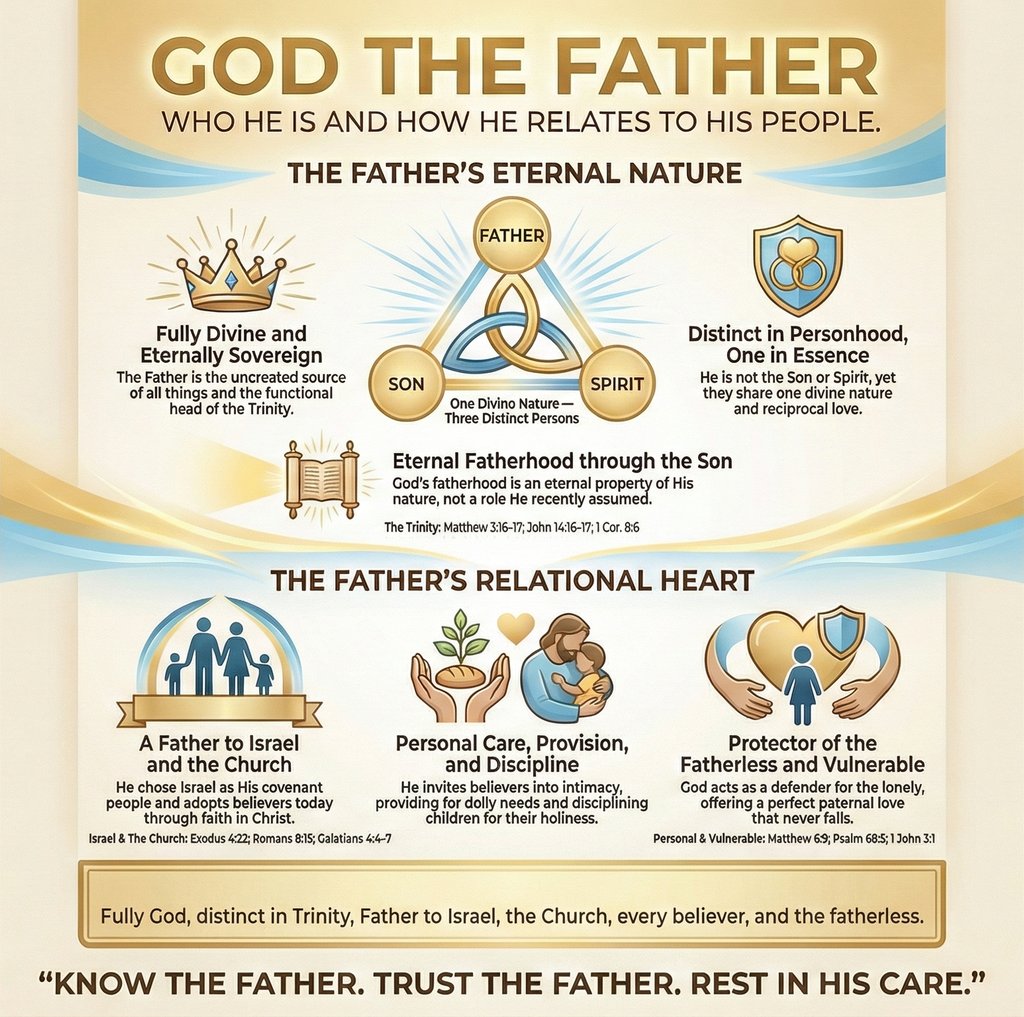
This podcast explores the identity of God the Father as the functional head of the Trinity. We examine how He exists as one of three distinct persons who share the same divine essence while retaining permanent distinctions known as hypostases.
Listeners will learn how the Father is the eternal author of all divine acts, directing the will of the Son and the Spirit to accomplish creation and salvation. We also discuss how the Father's paternal role is not a temporary mask but an essential property of His nature from eternity past.
God’s Prophetic Clock: Unlocking Daniel’s 70 Weeks
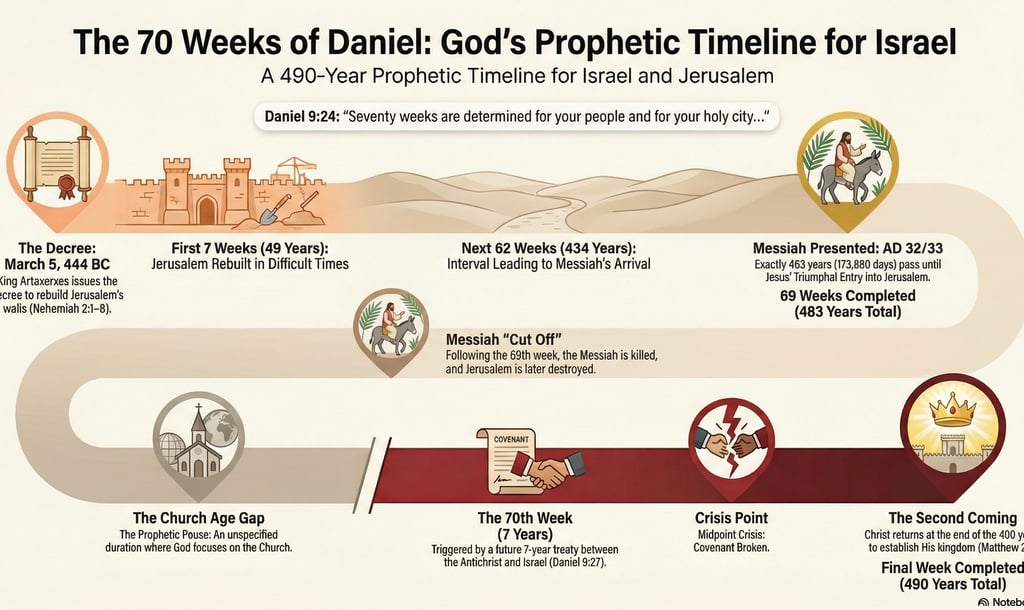
Is there a divine timeline that predicted the exact day of the Messiah’s arrival and outlines the future of the world? In this episode, we explore the prophecy of the 70 weeks from Daniel 9:24–27, a passage many scholars call the "indispensable chronological key" to all biblical prophecy. We break down the 490-year decree specifically determined for the nation of Israel and the city of Jerusalem.
In this episode, we discuss:
• The Starting Point: Why the "prophetic clock" began ticking on March 5, 444 BC, with the decree of Artaxerxes to rebuild Jerusalem.
• The Precision of the 69 Weeks: How the first 483 years (173,880 days) culminated exactly in the Triumphal Entry of Jesus Christ as "Messiah the Prince".
• The "Gap Called Grace": Understanding the current "prophetic parenthesis" or Church Age—a period of time not explicitly mentioned in this prophecy where the clock for Israel has temporarily stopped.
• The Coming 70th Week: What starts the final seven-year countdown, including the role of a future "prince" (the Antichrist) and his firm covenant with the leadership of Israel.
• The Final Goal: How this period ends with the Second Coming of Christ, the destruction of the Antichrist, and the fulfillment of six divine purposes for the nation of Israel, leading into the Messianic Kingdom.
Join us as we examine how this literal fulfillment of ancient scripture serves as monumental proof of the Bible's inspiration and provides a clear map for the end times.
From Within or Without? The Secret History of the New Testament Canon
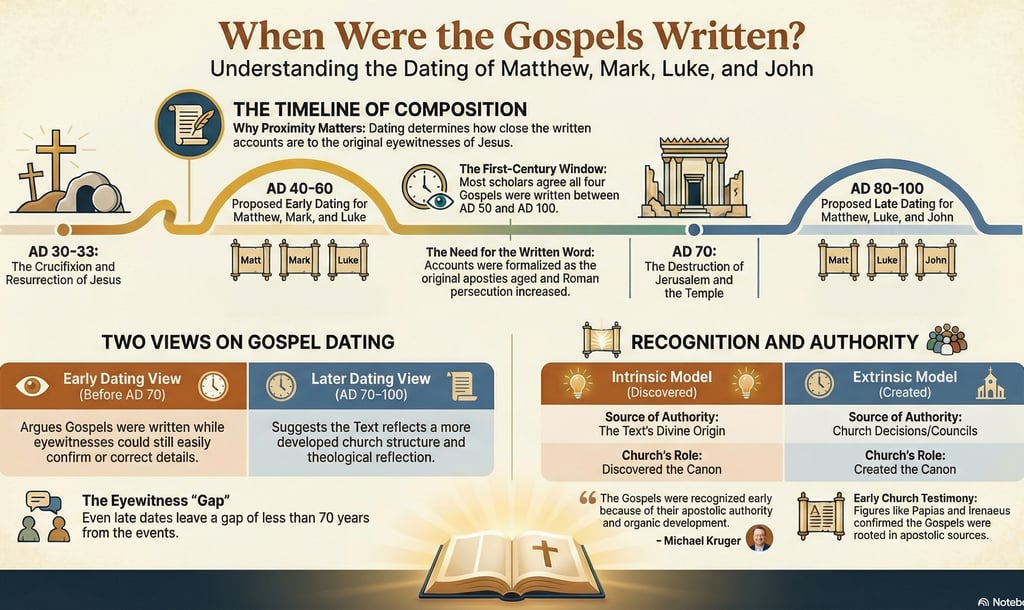
Podcast Description: How did the New Testament actually come to be? Was it a collection of books forced together by a later church committee, or was it a natural, organic growth from the very start of the faith? In this episode, we dive into the fascinating debate between the extrinsic and intrinsic models of canon, primarily through the groundbreaking work of scholar Michael Kruger.
We explore the "extrinsic model," which suggests the canon was a later artificial development imposed from the outside, often viewed as a "big bang type of event". We contrast this with Kruger’s "intrinsic model," which argues that the canon developed organically from within early Christianity.
Key topics in this episode include:
• The Source of Authority: Did the Church grant authority to the Gospels, or did it simply recognize the authority already found in the books themselves?.
• The Redemption-Revelation Pattern: Why the structure of the Old Testament led early Christians to naturally expect a "new revelational deposit" following the arrival of the Redeemer.
• The Power of Eyewitnesses: How the dating of the Gospels (whether in the 50s or the 90s AD) determines the influence of living witnesses who could confirm or contradict the accounts of Jesus' life.
• Defining "Canon": We break down the three critical definitions—exclusive, functional, and ontological—to understand how a book can be "canon" even before it appears on an official list.
Join us as we "reopen the dialogue" on the origins of the Bible and discover why the New Testament authors were explicitly aware of the apostolic authority invested in the texts they were creating
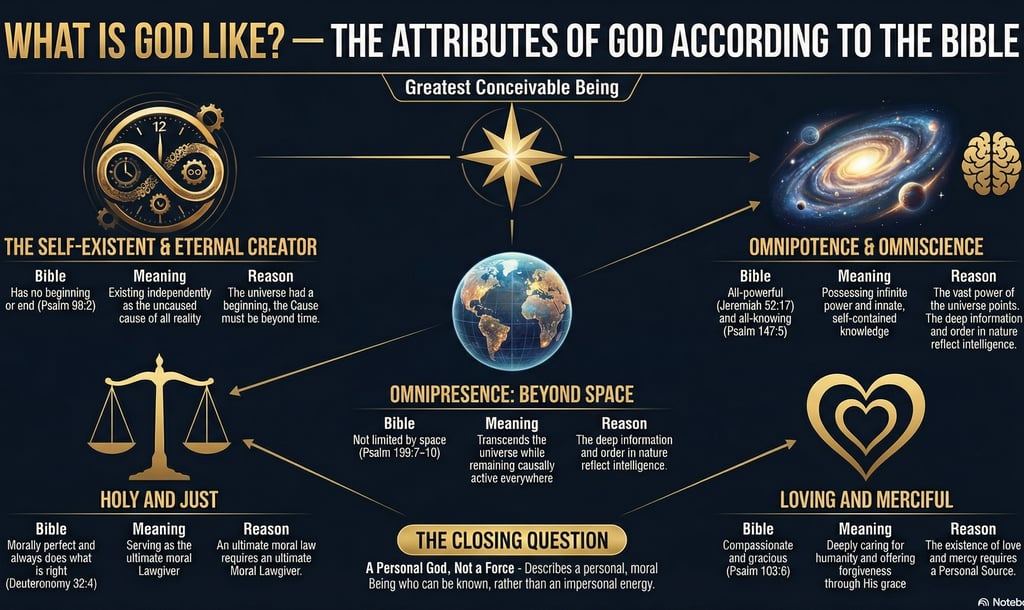
The Greatest Conceivable Being: Exploring the Attributes of God
Podcast Description
In this episode, we explore the nature of God through the lens of "Perfect Being Theology." Following the thought of Anselm of Canterbury, we define God not merely as the greatest being in existence, but as the greatest conceivable being—one who possesses all "great-making properties" to the maximum degree. Understanding these attributes is more than a theological exercise; it is essential for defending the coherence of theism, clarifying Christian doctrines like the atonement, and deepening our personal relationship with the Creator.
Key Topics Discussed:
• Omniscience (All-Knowing): We address the challenge of fatalism—the idea that if God knows our future, we aren't free. We explain how God’s foreknowledge tracks but does not cause our free choices. We also contrast the "perceptualist model" (God looking into the future) with the "conceptualist model" (God’s knowledge as innate and self-contained).
• Omnipotence (All-Powerful): Is God’s power limited if He cannot create a "square circle" or tell a lie? We discuss why omnipotence only applies to logically possible states of affairs and how God’s inability to do evil is an expression of His perfect moral nature rather than a lack of power.
• Omnipresence (Everywhere-Present): God is an immaterial spirit who transcends three-dimensional space altogether. We explore how He is present at every point in the universe through His total awareness and causal activity, sustaining all of creation moment by moment.
• Aseity (Self-Existence): Unlike contingent humans, God is the "uncaused Cause" and "uncreated Creator". We dive into the concept of necessary existence, explaining why God exists by a necessity of His own nature in every possible world.
• Communicable vs. Incommunicable Attributes: We categorize God’s traits into those He shares with us to a finite degree—like love, justice, and wisdom—and those that belong to Him alone, such as immutability, eternity, and unity.
Why This Matters: When we see God's "invisible attributes" clearly through the complexity and vastness of creation, we find a foundation for absolute trust. By understanding that God is all-good, all-knowing, and all-powerful, we can move beyond mere opinion and worship Him in the fullness of His revealed character.
Join us as we scratch the surface of these "mind-boggling" truths and grow in awe of the Lord, whose greatness is truly unsearchable.
Two Powers in Heaven: Uncovering the Trinity in the Old Testament
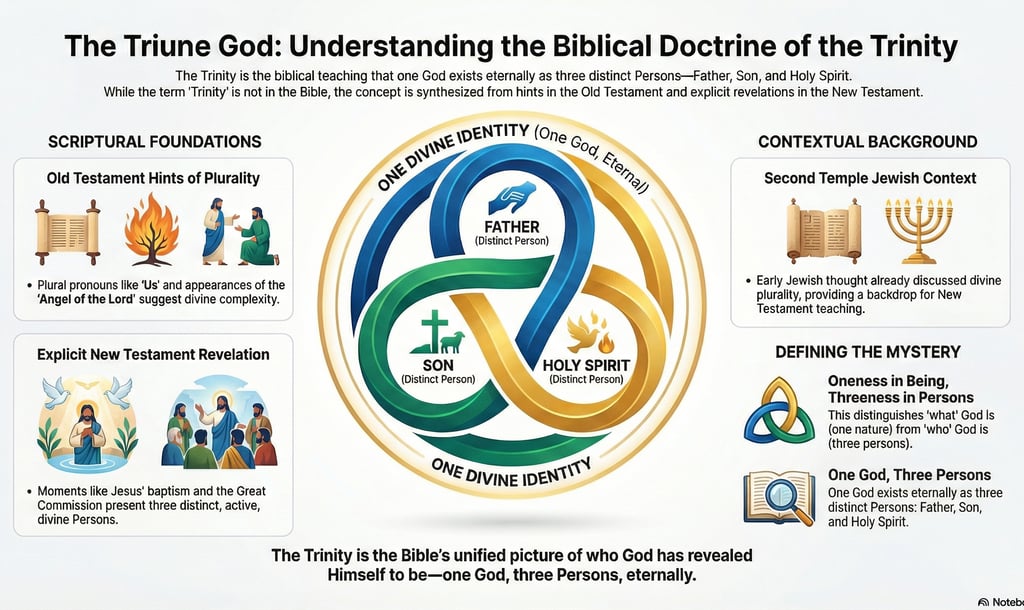
Is the Trinity a later Christian invention, or was it "hiding in plain sight" within the Hebrew Scriptures all along? In this episode, we challenge the common assumption that the Old Testament teaches a strictly solitary, unitarian God. By drawing on ancient linguistic clues, scriptural patterns, and historical Jewish theology, we reveal that the foundation for a multi-personal God is woven into the very fabric of the Tanakh.
In this episode, we discuss:
• The Linguistic Clues of Plurality: We examine why the Hebrew name for God, Elohim, carries a plural masculine ending and why the title Adonai literally means "my Lords."
• The Nuance of the Shema: We break down Deuteronomy 6:4, the central confession of Jewish monotheism. Discover the difference between echad (a compound unity, like a husband and wife becoming "one flesh") and yachid (absolute singularity), and why the text leaves the door open for divine plurality.
• Divine Conversations: Why does God refer to Himself as "Us" and "Our" in Genesis 1:26, 3:22, and 11:7? We explore these plural self-references and the "Trisagion" of Isaiah 6:3—the threefold cry of "Holy, holy, holy"—as hints of the Triune nature of God.
• Yahweh Sent by Yahweh: We analyze startling passages in Zechariah 2 and Isaiah 48 where one person called Yahweh is sent by another person called Yahweh. These "intricate harmonies" point toward a plurality of persons within the one divine essence.
• The "Two Powers" in Early Judaism: Before the second century C.E., many Jews held a binitarian view of God, believing in an invisible, transcendent Yahweh and a visible Yahweh who often appeared in human form. We discuss how this "Two Powers in Heaven" framework was considered orthodox until it was declared heretical by rabbis as a reaction to Christianity.
• The Angel and the Spirit: We look at the Angel of the Lord, who speaks with divine authority and bears God's name, and the Holy Spirit, who is portrayed not as a force, but as a personal agent who can be "grieved" by rebellion.
The Trinity is not a break from the Old Testament; it is the only framework that makes sense of its most mysterious and profound passages. Join us as we explore how the missions of the Son and the Spirit were anticipated by the Patriarchs and Prophets centuries before the New Testament.
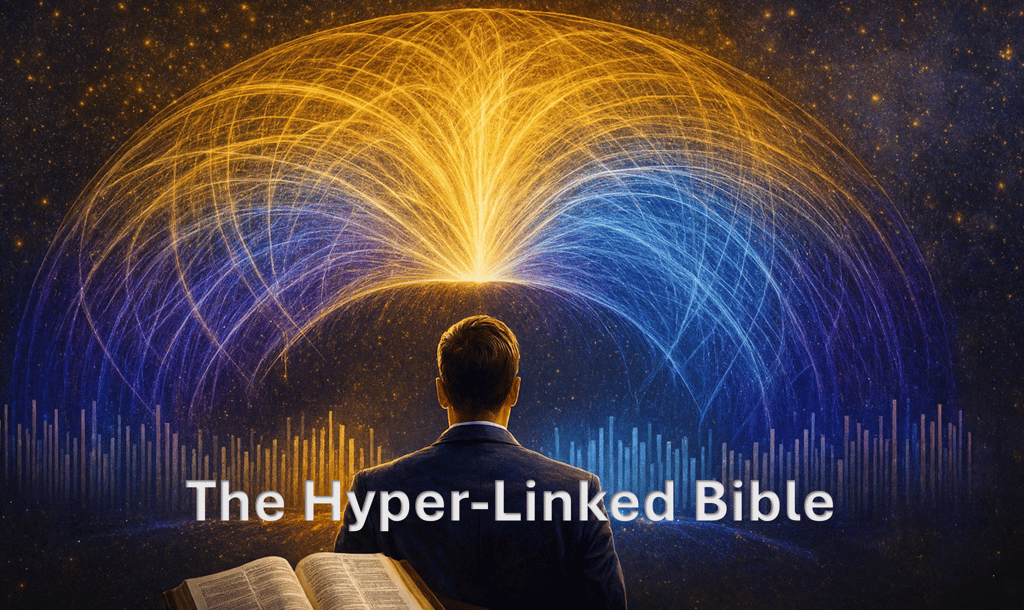
The Hyperlinked Word: Mapping the 63,779 Connections of Scripture
About the Show: Welcome to The Hyperlinked Word, a podcast dedicated to exploring the most complex and interconnected piece of literature in human history. Long before the invention of the internet, the Bible functioned as the world's first hyperlinked book, containing a staggering 63,779 formal verse-to-verse cross-references that weave together a single, unified story.
In each episode, we dive into the "perfect continuity" of the Bible—a book written by 40 different authors over 1,500 years, across three continents and in three languages. Despite this diversity of authors—ranging from kings and physicians to fishermen and slaves—the text displays an internal architecture that points consistently toward one person: Jesus Christ.
What You’ll Discover:
• The Architecture of Unity: We analyze the famous arc diagram of the Bible, where the longest chapter, Psalm 119, sits at the very center as a celebration of the trustworthiness of God's Word.
• The "Signs" Phenomenon: We explore how the Bible uses subplots—like the sacrifice of Isaac or the bronze serpent in the wilderness—that often make no sense in isolation but become "hyperlinks" to the ultimate sacrifice of Christ at the end of the story.
• Scripture Interpreting Scripture: We discuss the theological principle that the Bible is its own best interpreter. From the Old Testament's "types" to the New Testament's fulfillments, we show how the text provides its own internal clarity.
• Apologetics and Depth: Drawing on insights from thinkers like Jordan Peterson, we discuss why this level of interconnectivity is impossible to explain through naturalistic means, pointing instead to a "Master Editor" or Divine Author.
Our Philosophy: We believe the Bible is "clear enough for any believer to understand the essentials, but deep enough that no one exhausts it". While the Holy Spirit provides internal clarity for the believer, we also emphasize the importance of community, teachers, and study tools to help navigate the historical and cultural distances of the text.
Whether you are a skeptic looking for the mathematical beauty of ancient literature or a disciple looking to "rightly divide the word of truth," this podcast will help you see the Bible not as a collection of random writings, but as a single redemptive storyline.
Subscribe now to start your journey through the 63,779 connections that change everything.
Unveiling the Katechon: The Mystery of the Restrainer in 2 Thessalonians 2
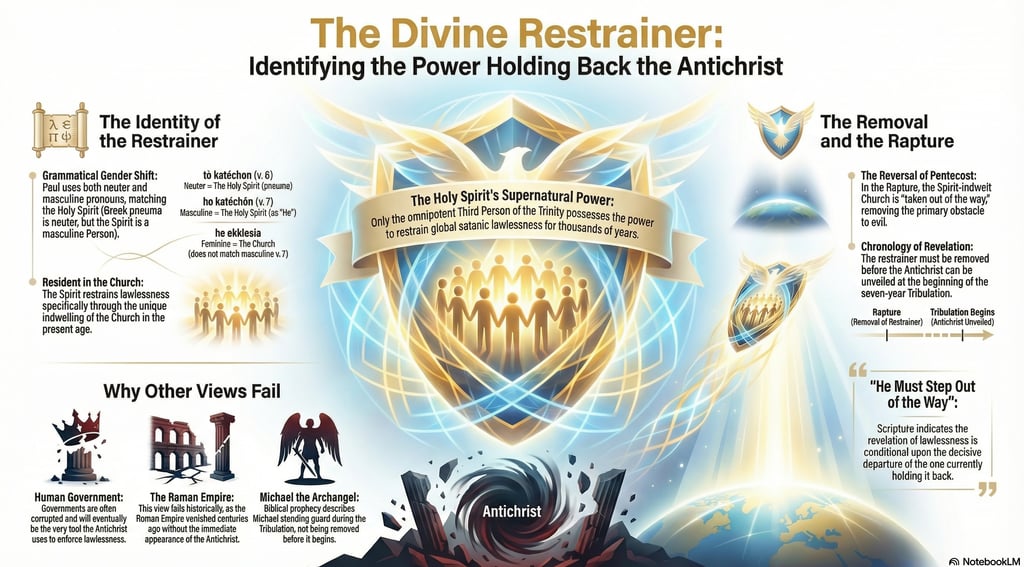
In this episode, we dive deep into one of the most debated and difficult passages in the entire New Testament: Paul’s description of the "Restrainer" (or Katechon) in 2 Thessalonians 2:6-7. For nearly 2,000 years, theologians have grappled with the identity of the force that holds back the "Man of Lawlessness"—the Antichrist—from being fully revealed to the world.
We explore the four major theories found in the sources, examining the scriptural, linguistic, and historical evidence for each:
• The Holy Spirit and the Church: We discuss the prominent modern view that identifies the Restrainer as the Holy Spirit indwelling the Church. This theory highlights the linguistic shift in Paul’s Greek from a neuter gender ("what is restraining") to a masculine one ("he who restrains") as evidence of a personal, supernatural agent. We also look at how this view serves as a pillar for Pre-Tribulation eschatology, suggesting that the Spirit must be "taken out of the way" via the Rapture before the Antichrist can rise.
• The Roman Empire: We travel back to the Early Church to see why fathers like Tertullian, Chrysostom, and Augustine were nearly unanimous in believing the Restrainer was the Roman Empire and its Caesars. We examine the argument that the fall of Rome was the necessary catalyst for the rise of the Papacy or the Antichrist, a view central to the Historicist tradition.
• Michael the Archangel: We analyze a compelling scholarly theory that Michael, the protector of Israel, is the one who must "stand down" to allow the period of unprecedented tribulation to begin. This view draws heavily from the book of Daniel and the relationship between celestial warfare and earthly events.
• The First-Century Preterist View: Finally, we look at an alternative historical interpretation that identifies the Restrainer as the Jewish high priests who led a peace movement in Jerusalem until their deaths in A.D. 68, which subsequently allowed the Zealot movement and the "Man of Lawlessness" to seize the Temple.
Join us as we navigate these complex "secondary systems" of theology—from the political theology of Carl Schmitt to the "Marian image of history"—to understand how this ancient mystery continues to shape our view of lawlessness and divine providence today.
Key Topics:
• Why the "mystery of lawlessness" is already at work.
• The theological necessity of an omnipotent restrainer.
• Rebutting the "Evil Restrainer" theory: Could Satan be restraining himself?.
• The role of human government and the "Noachic Covenant" in restraining sin.
#Theology #EndTimes #Restrainer #2Thessalonians #BibleStudy #Katechon #ChurchHistory #Eschatology
Scripture and Spade: Unearthing the Historical Truth
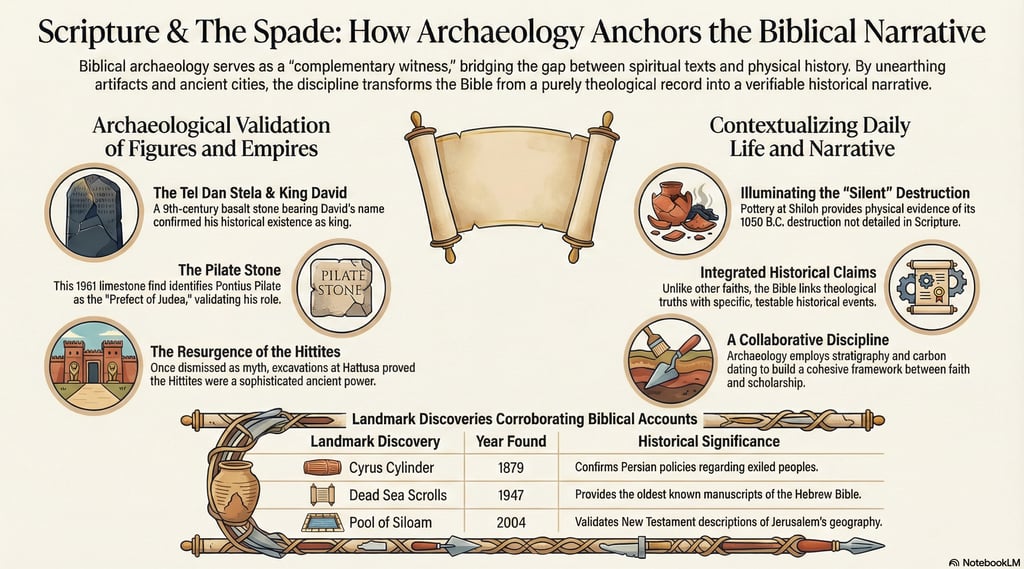
Description: Join us for a journey into the "Sacred Soil" of the ancient Near East as we explore the fascinating intersection where archaeological discovery meets biblical narrative. Unlike many world religions that emphasize philosophical truths or blend mythology with history, the Bible is distinctive because it integrates its theological claims with verifiable, datable historical history. This podcast investigates how the spade of the archaeologist provides an independent, tangible witness to the people, places, and events of the scriptures.
In each episode, we examine landmark discoveries—from the Pilate Stone at Caesarea Maritima, which confirmed the historical reality of the Roman Prefect of Judea, to the Tel Dan Stela, which provided the first physical evidence of King David’s existence. We delve into the once-dismissed Hittite Empire and the ruins of Hattusa, revealing how inscriptions and monumental architecture resonate with the geopolitical landscape described in the Old Testament.
Beyond simple validation, we discuss how archaeology makes the Bible "a whole new book" by illuminating the daily life, customs, and socio-political tensions of the ancient world. We also tackle the complex dialogue between faith and scholarship, exploring how physical evidence invites a more nuanced interpretation of scripture and encourages a tradition of inquiry that strengthens spiritual conviction through empirical reality. Whether you are a scholar or a believer, Scripture and Spade offers a comprehensive look at how archaeology anchors the biblical narrative in the historical record
"I Never Knew You": Piercing the Veil of Religious Pretense
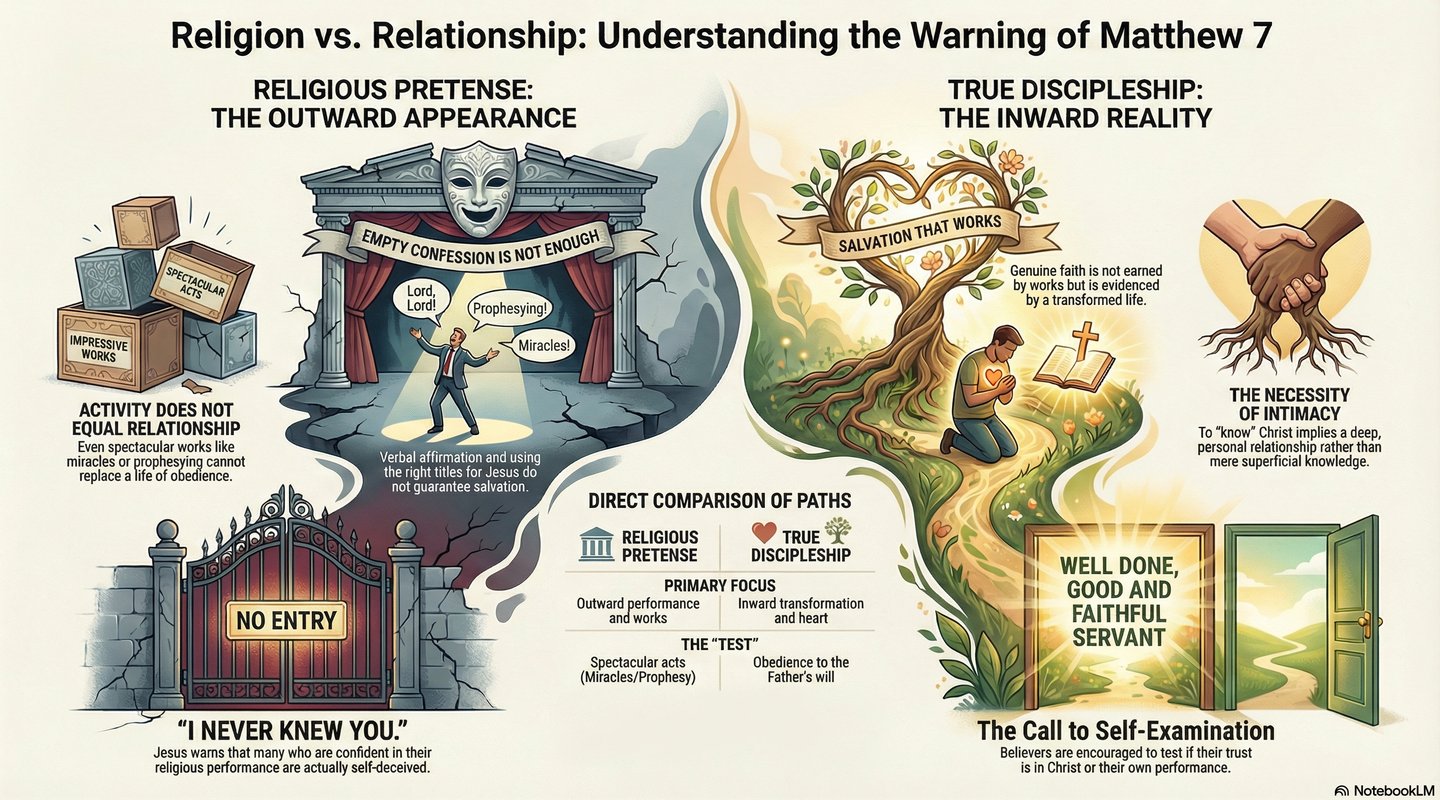
In this episode, we tackle what many consider to be the most startling and sobering words ever spoken by Jesus. Drawing from Matthew 7:21–23, we explore the terrifying reality that it is possible to be deeply religious, perform "spectacular" ministry, and yet remain completely unknown by God.
Jesus warns that on "that day," many will appeal to their impressive resumes—prophesying, driving out demons, and performing miracles—only to hear the chilling response: "I never knew you. Depart from Me, you lawbreakers!". We break down why empty confession and calling Jesus "Lord" is not enough if it is not backed by genuine faith and a transformed life.
Key topics discussed in this episode:
• The Resume of the Lost: Why religious activity, no matter how miraculous, can never replace intimacy with Christ.
• Salvation That Works: Understanding that true discipleship is defined by doing the Father’s will and producing the fruit of obedience, repentance, and holiness.
• The Tragedy of Self-Deception: A look at why "knowing" in a biblical sense implies a deep, personal relationship, and why Jesus says He "never" knew those who relied on superficial faith.
• The Test of Faith: Practical ways to examine your own heart, as encouraged by Paul in 2 Corinthians 13:5, to ensure your trust is in Christ alone rather than your own performance.
This conversation is not intended to drive believers toward despair, but rather to move us toward honest self-examination. Christianity is ultimately not about what we do for Christ, but whether we are known by Him through a surrendered heart.
Join us as we move past the masks of religious pretense to seek a genuine, saving relationship with the Savior who offers it freely to all who trust Him.
Listen now to ensure that on the last day, you hear "Well done," rather than "I never knew you."

The Death of Reason: Unmasking the Global Crisis of Scientific Corruption and Ideological Capture
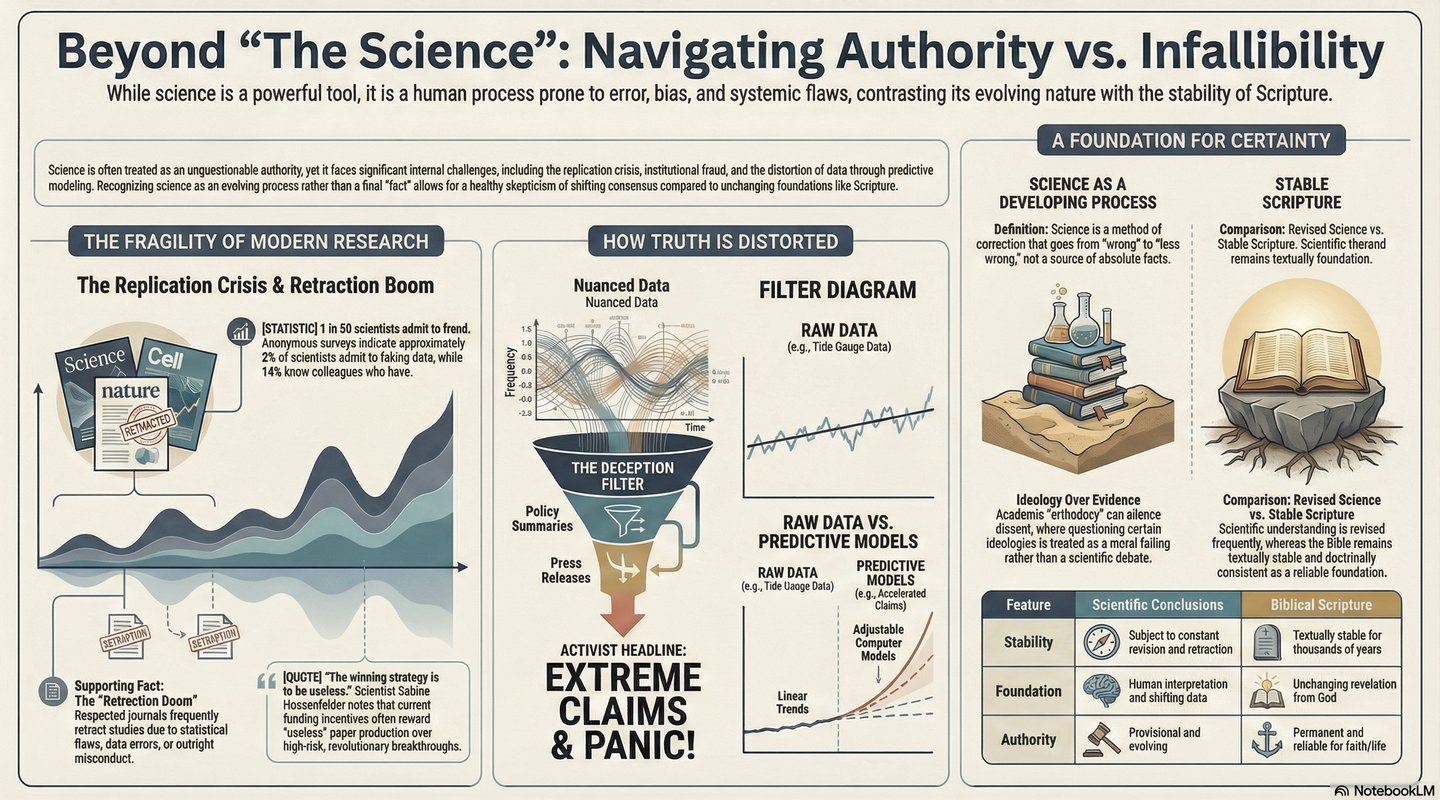
In this episode, we dive deep into why public trust in scientific institutions is collapsing. Drawing from a variety of expert testimonies in the sources, we examine how systemic fraud, broken incentive structures, and ideological "mind viruses" are dismantling the foundation of objective truth.
The Illusion of Consensus: Climate and Sea Levels We begin with environmental expert Michael Shellenberger, who exposes a startling disconnect in climate science. While actual tide gauge data shows no evidence of sea-level rise acceleration, researchers often bypass this data in favor of models built on manipulated assumptions. These findings are then filtered through "summaries for policymakers" and press releases until the original data is completely obscured. Shellenberger attributes this to a widespread "intellectual cowardice" where specialists are too afraid to challenge the prevailing narrative for fear of being labeled "evil" or "anti-science".
The Academy of "Useless Garbage" Physicist Sabine Hossenfelder joins the conversation to explain why modern research is often "mathematical fiction". She argues that the current academic system creates a "natural selection of bad science" because the "winning strategy" for securing funding is to produce "useless garbage" that colleagues approve of but benefits no one else. This "publish or perish" culture forces even well-meaning researchers to cut corners just to survive economically.
Ideological Capture and the "Mind Virus" The sources highlight a shift where subjective feelings now trump objective evidence in university settings. Melanie Phillips describes how universities have become "crucibles of the destruction of reason," where ideologies like "Critical Social Justice" act as a "mind virus" that views truth merely as a political construct used to maintain power. We discuss how this has led to the rise of "grievance studies," where gibberish papers on "rape culture at dog parks" or "fat studies" are routinely accepted by prestigious journals.
The Business of Fraud: Paper Mills and Organized Crime We uncover the dark underbelly of scientific publishing: a global network of organized crime known as "paper mills". These entities sell authorships and citations to academics who have done no actual work, using AI and "synonymizers" to churn out fraudulent studies. We look at the devastating real-world impact of this, including:
• Dietrich Stapel: The superstar psychologist who faked over 50 studies to tell "neat stories".
• Medical Catastrophes: How fraudulent research into Alzheimer’s and Parkinson’s has led to wasted billions of dollars and clinical drug trials that may have actively harmed patients.
Finding the Path Back to Truth Finally, we explore how to reclaim scientific integrity. The sources suggest embracing the Greek value of "parrhesia" (speaking truth boldly in the face of danger) and building decentralized social networks to bypass institutional censorship. It is time to stop blindly "trusting the science" and start demanding transparency, accountability, and a return to rational inquiry


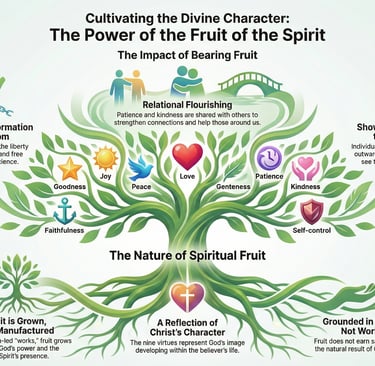
Grown, Not Manufactured: The Path to Divine Character
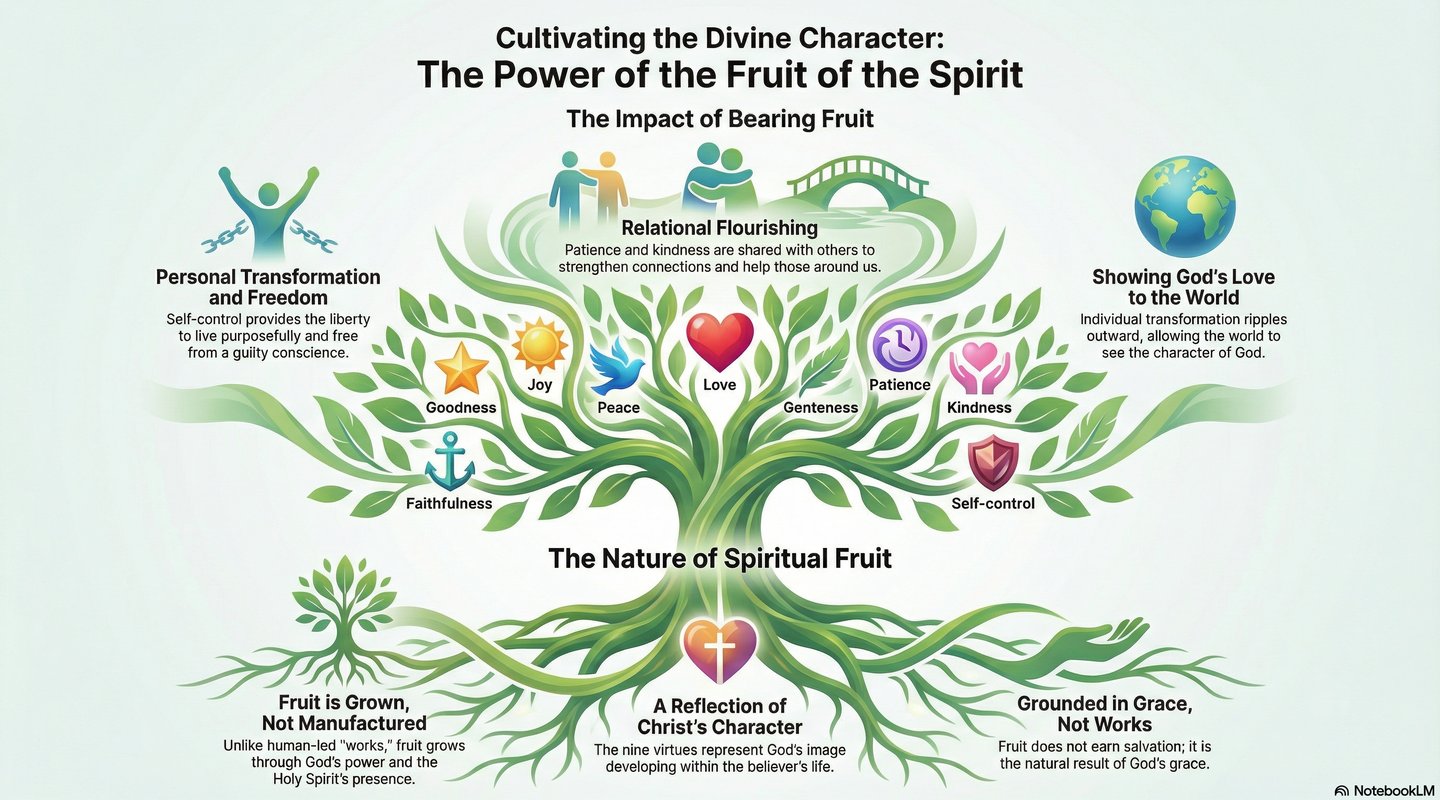
In this episode, we explore the profound distinction between the "works of the flesh" and the "fruit of the Spirit." While human effort can produce "works" driven by self-centered motivation and ingenuity, the sources explain that true spiritual virtues cannot be manufactured by human will alone—they must be grown through the power of God.
We dive deep into the nine virtues of the Spirit—love, joy, peace, longsuffering, kindness, goodness, faithfulness, gentleness, and self-control—and how they collectively represent the character of Jesus Christ. You will discover:
• The Power of Partnership: Although the Spirit produces these qualities, spiritual growth is not a "magical infusion." It requires an active partnership where believers work hard to put these virtues into practice while grounding their obedience in God’s grace.
• The Nature of Growth: We discuss why the "works of the flesh" are plural and divisive, while the "fruit of the Spirit" is a singular, harmonious manifestation of a Christ-centered life.
• A Holistic Transformation: The impact of this growth isn't just internal. It leads to personal transformation (including freedom from a guilty conscience), relational flourishing through patience and kindness, and a broader cultural impact as the world sees God’s character reflected in you.
Join us as we discuss how behavior fundamentally changes when Christ is Lord of your life, transforming you into someone who lives and thinks like Him


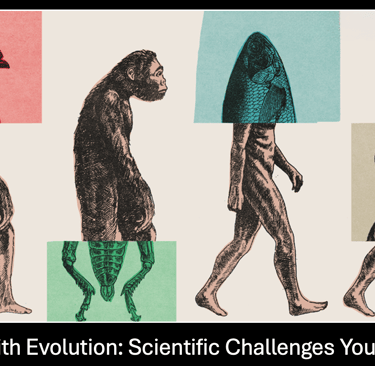
Evolution Under the Microscope: Science, Limits, and the Forest of Life
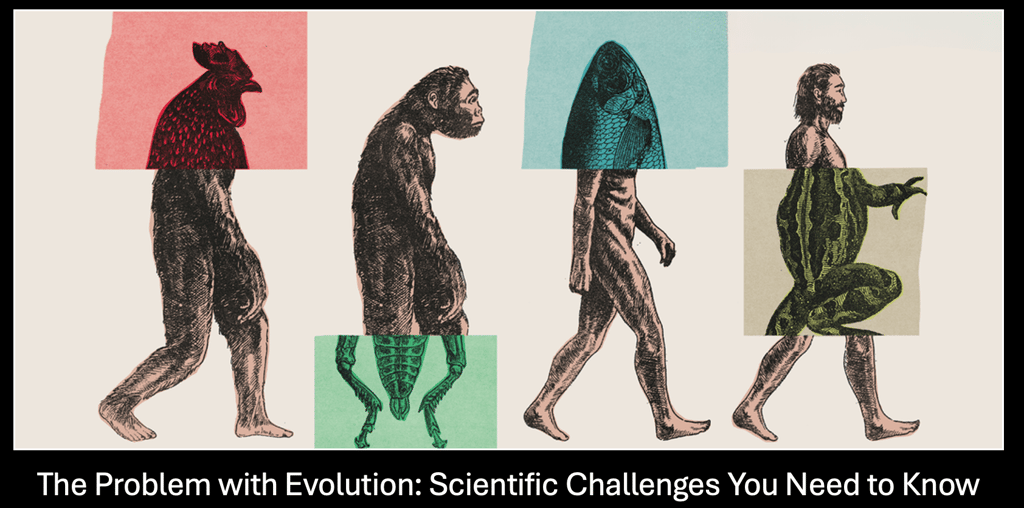
How confident is the science behind evolution? In this thought-provoking episode, we explore a rigorous scientific critique of evolutionary theory presented by biomedical engineer Dr. Rob Stadler and synthetic organic chemist Dr. James Tour. Together, they challenge listeners to distinguish between well-established, observable science and broader evolutionary claims that, they argue, rely more on assumptions than direct experimental evidence.
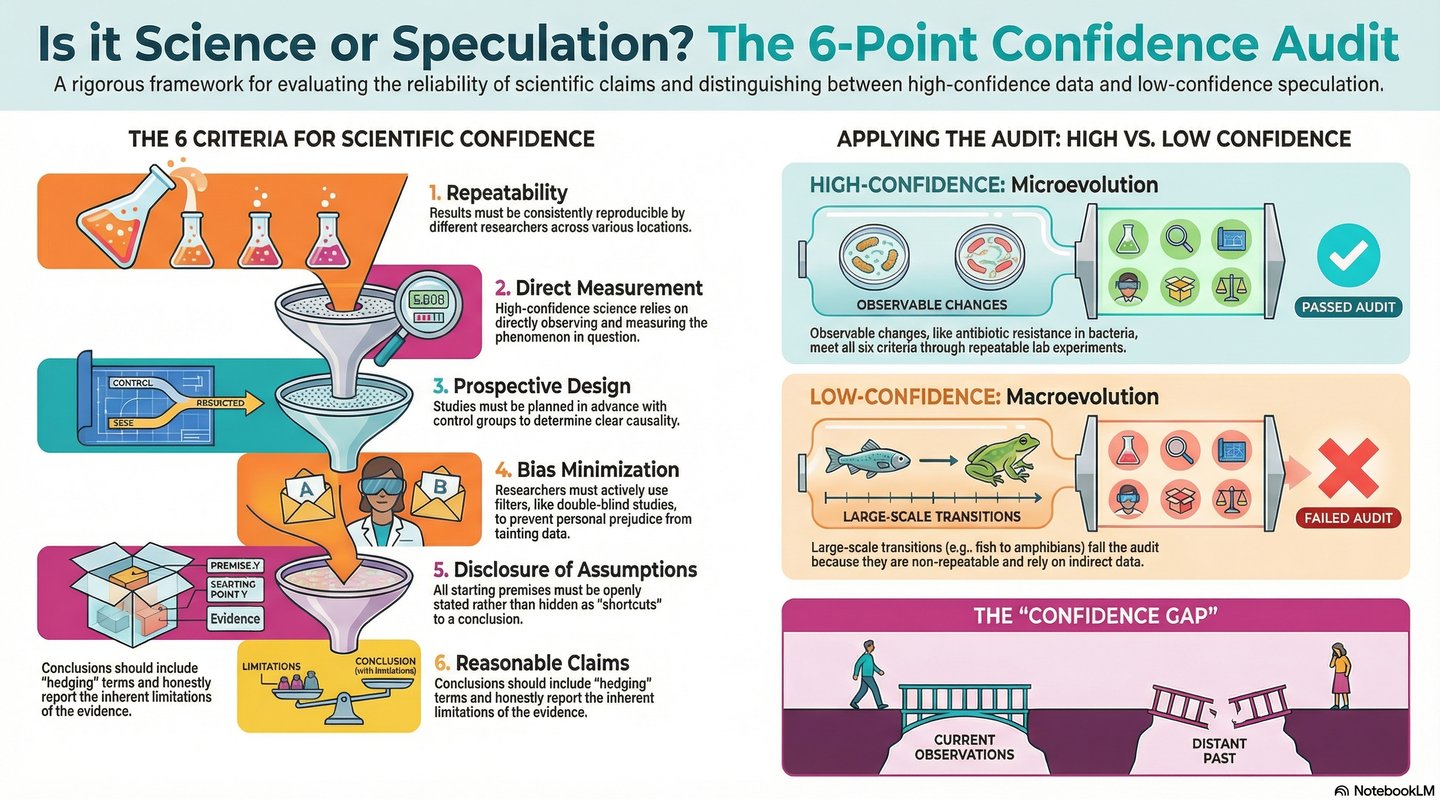
Dr. Stadler introduces a powerful framework for evaluating scientific confidence using six strict criteria — including repeatability, direct measurement, bias control, and cautious reporting. Applying this framework, he separates microevolution (small, observable changes within organisms) from macroevolution and abiogenesis, which he contends are based largely on indirect inference rather than repeatable experimentation.
The episode also examines some of the most frequently cited evidences for evolution — the fossil record, genetic similarity, and orphan genes — and asks whether these truly demonstrate large-scale evolutionary transitions or simply variation within limits. Dr. James Tour adds a chemical perspective, arguing that the origin of life and major biological innovations present profound challenges that current chemistry has yet to solve.
We also look at long-term laboratory evolution experiments involving bacteria and other organisms, discussing what these studies show about the limits of mutation, natural selection, and biological change.
Ultimately, this episode presents the case for a “Forest of Life” model — the idea that living organisms diversify within boundaries rather than sharing a single universal ancestry — and calls for greater humility and clarity when teaching the strengths and limitations of evolutionary science.
Whether you’re a student, skeptic, scientist, or person of faith, this conversation will stretch your thinking about what we really know — and what we don’t — about the history of life on Earth.
Faith Alone
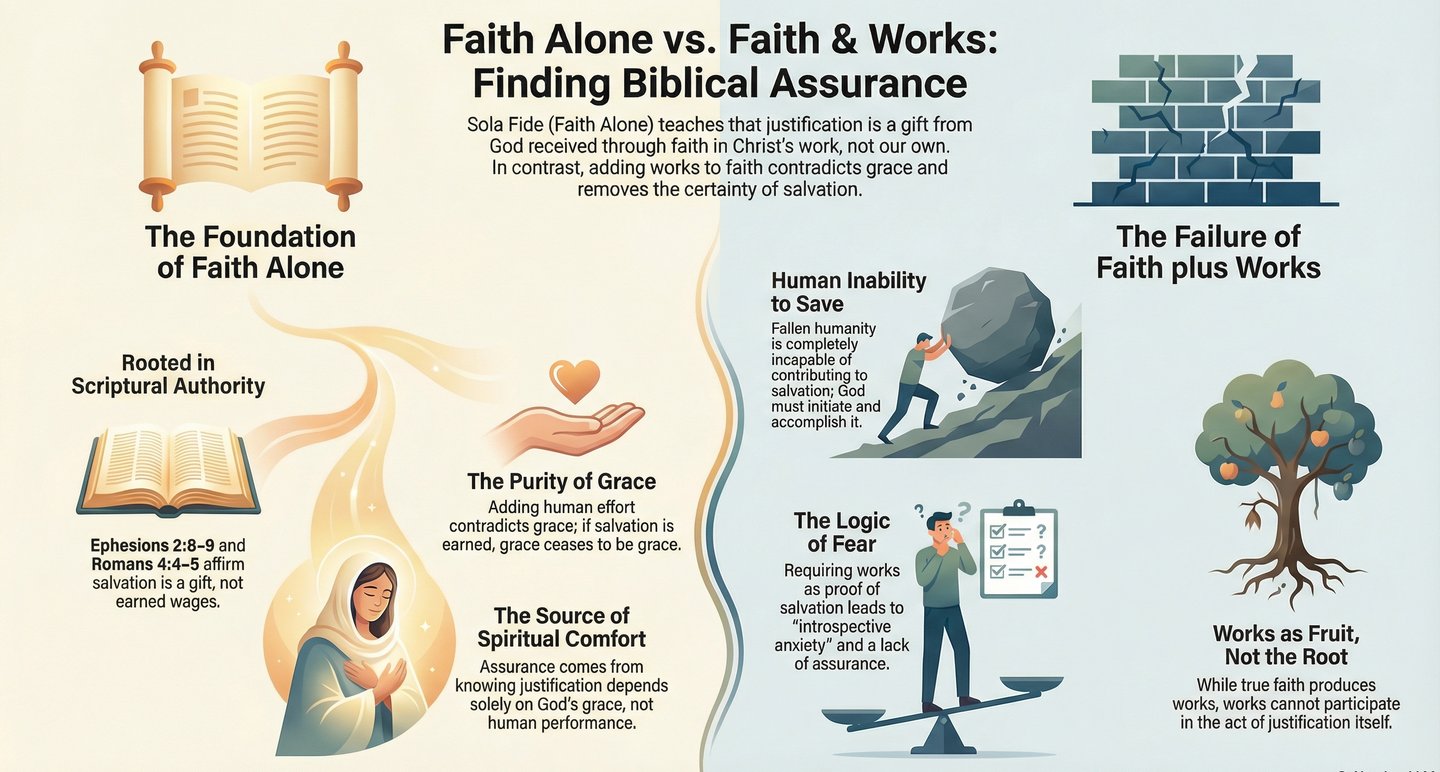
This podcast explores the theological heart of the Protestant Reformation and the enduring debates it continues to spark. At the center is Sola Fide — Faith Alone — the conviction that sinners are justified not by moral effort, religious performance, or social standing, but by faith in the righteousness of Christ.
Each episode dives into the deep questions surrounding justification, grace, and the authority of Scripture. We examine historic Reformation teaching alongside modern philosophical and theological critiques from thinkers like Alasdair MacIntyre, Jürgen Moltmann, and Jean Bethke Elshtain. Does standing “alone before God” create isolated individuals? Does faith alone weaken the call to moral responsibility?
In response, we recover the classic Protestant distinction between the root and the fruit of salvation: while faith alone justifies, the faith that justifies is never alone. True faith inevitably produces good works — not as the cause of salvation, but as its living evidence.
More than a theological debate, these doctrines offer deep spiritual comfort. By grounding salvation entirely in Christ’s finished work, believers are freed from anxious self-examination and liberated to love God and neighbor with joy and gratitude.
If you care about church history, systematic theology, and the life-changing clarity of the gospel, this podcast is for you.

Did God Create Evil? Augustine Says No
What if evil isn’t actually a “thing” at all?
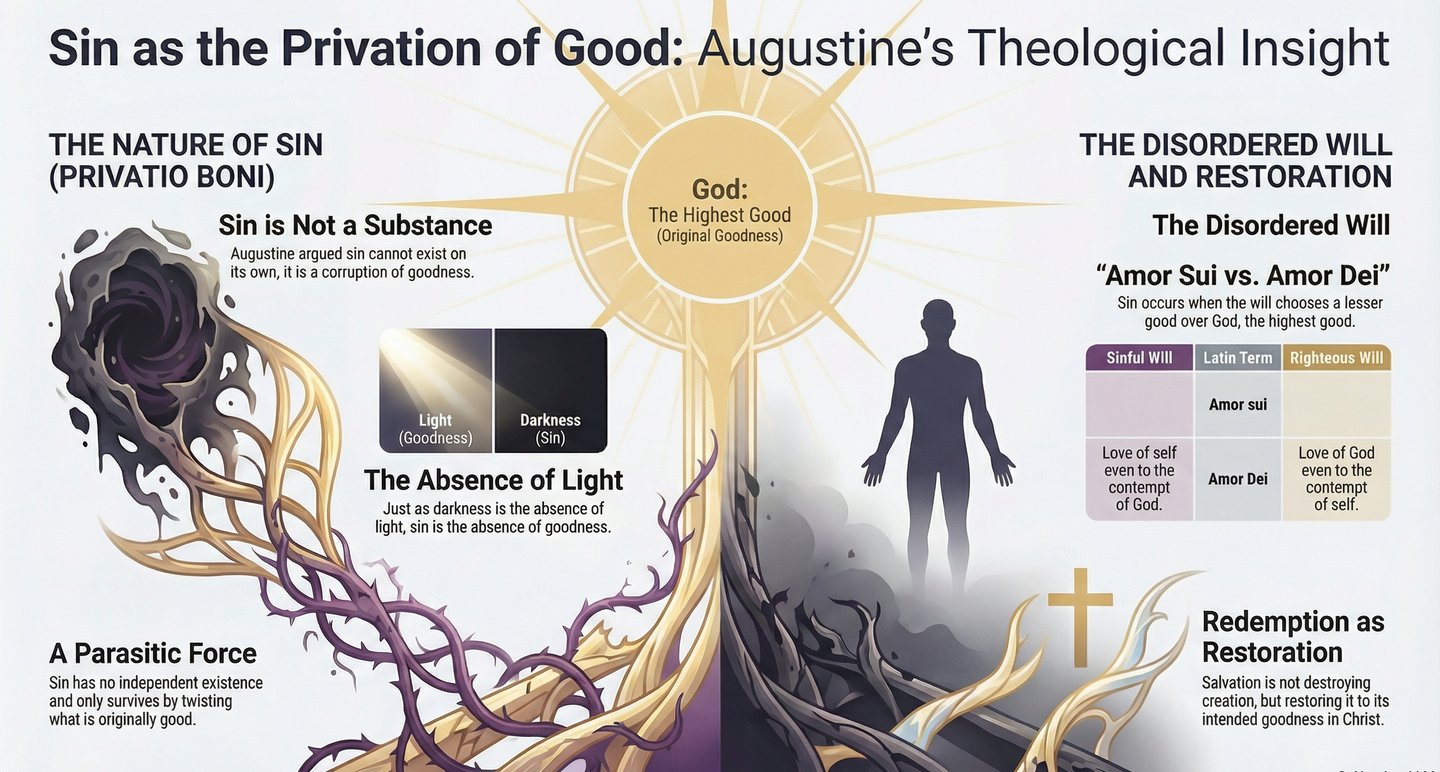
In this episode, we explore Augustine of Hippo’s classic definition of sin as the privation of good. Rather than describing evil as something God created, Augustine argued that sin is a corruption of what was originally made good. This insight protects the truth of God’s perfect goodness while offering a profound explanation for the presence of evil in the world.
We also examine Augustine’s teaching that sin begins in a disordered human will — when we choose lesser goods over the highest good, who is God Himself. Evil, then, is not a substance but a distortion, a parasite that feeds on what is good.
Finally, we discuss how this understanding shapes the Christian view of redemption. Salvation is not about God discarding creation, but restoring and healing what has been broken by sin.
Augustine’s framework has shaped Western theology for centuries and continues to provide a powerful way to think about morality, grace, and the nature of evil today.
🎧 In this episode:
Augustine’s definition of sin
Why evil is a corruption, not a creation
The role of the human will
How this view defends God’s goodness
Redemption as restoration, not replacement
Whether you’re a student of theology, a pastor, or simply someone wrestling with the problem of evil, this conversation offers rich and hopeful insight.

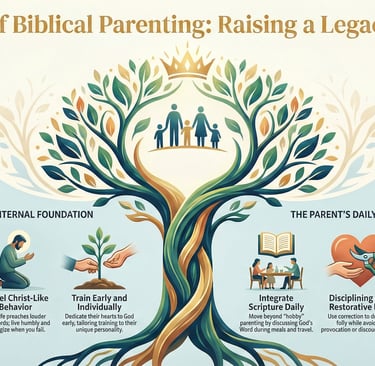
Raising a Legacy: Seven Biblical Strategies for Faithful Parenting
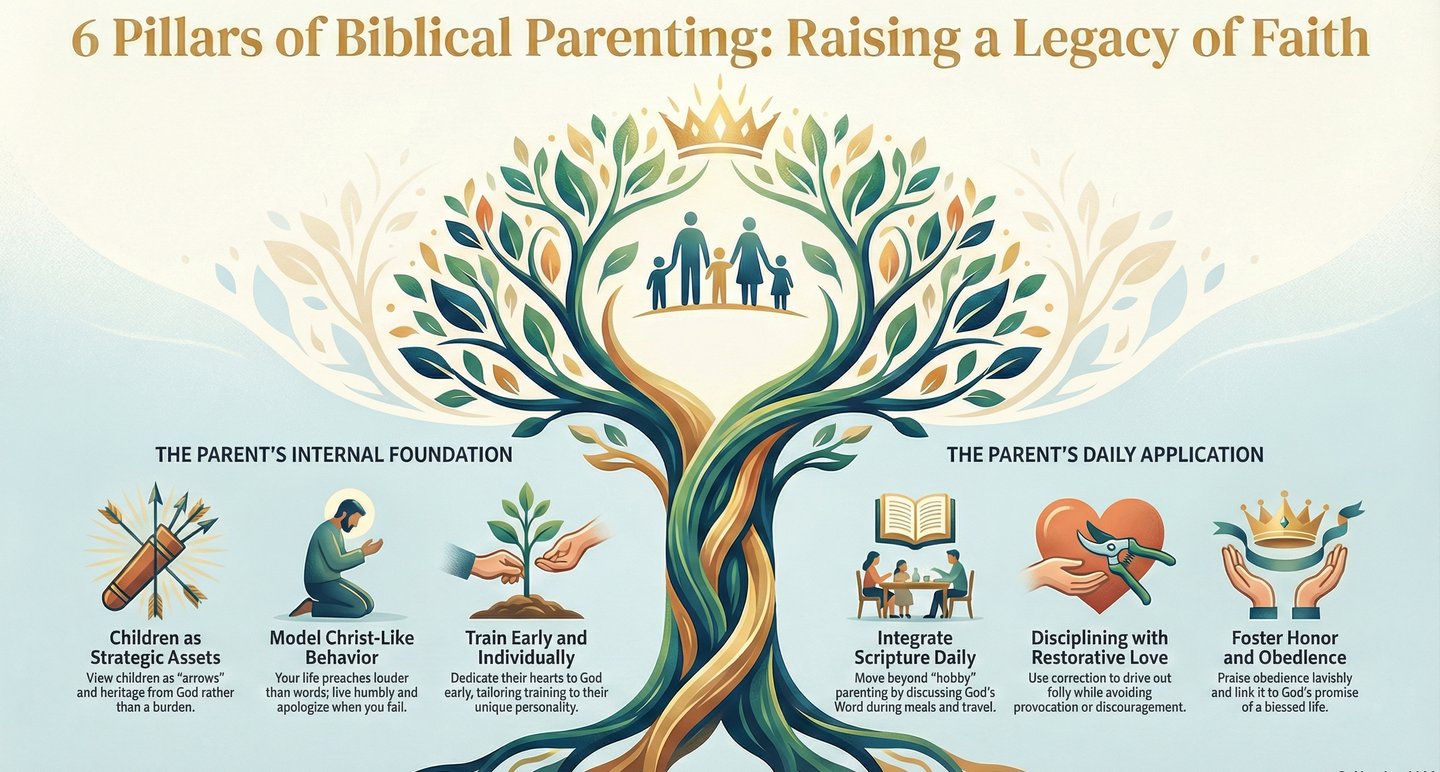
In a culture increasingly hostile to biblical values, Christian parents are called to think beyond survival and toward spiritual legacy. Raising a Legacy explores seven foundational biblical strategies designed to help parents cultivate enduring faith in their children. This episode reframes children not as burdens, but as divine blessings—strategic gifts entrusted by God for future generations.
Through Scripture-centered parenting, loving discipline, Christ-like modeling, and a household culture shaped by obedience and honor, listeners will discover practical wisdom for protecting, providing for, and leading their children toward purposeful, God-honoring lives. This is a call for parents to parent intentionally—biblically, faithfully, and with eternity in view.

Escaping the Tribulation: What the Church Fathers Taught
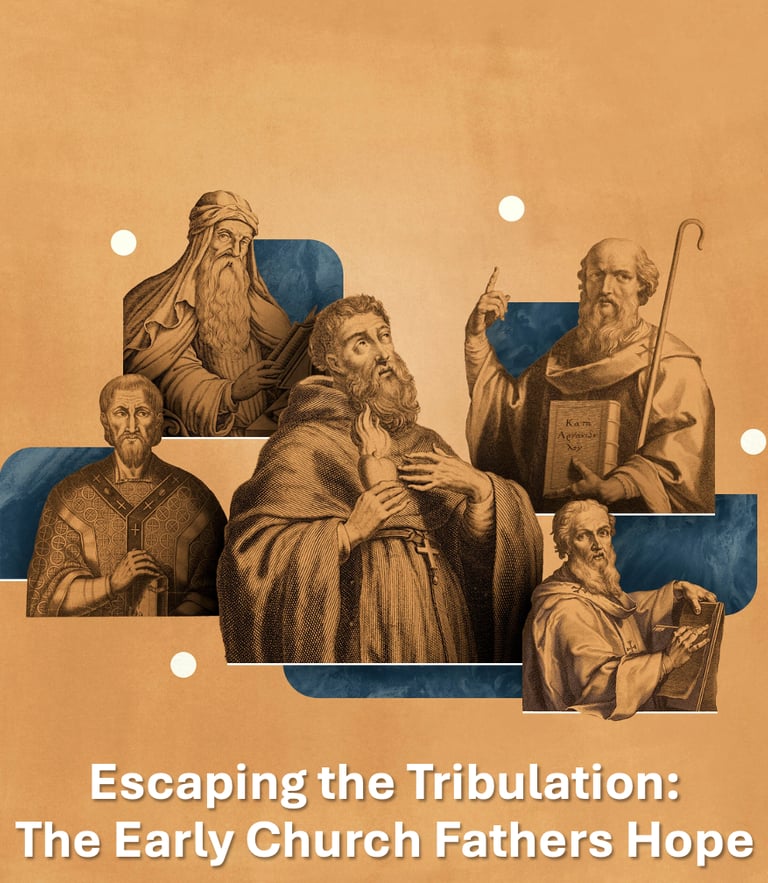
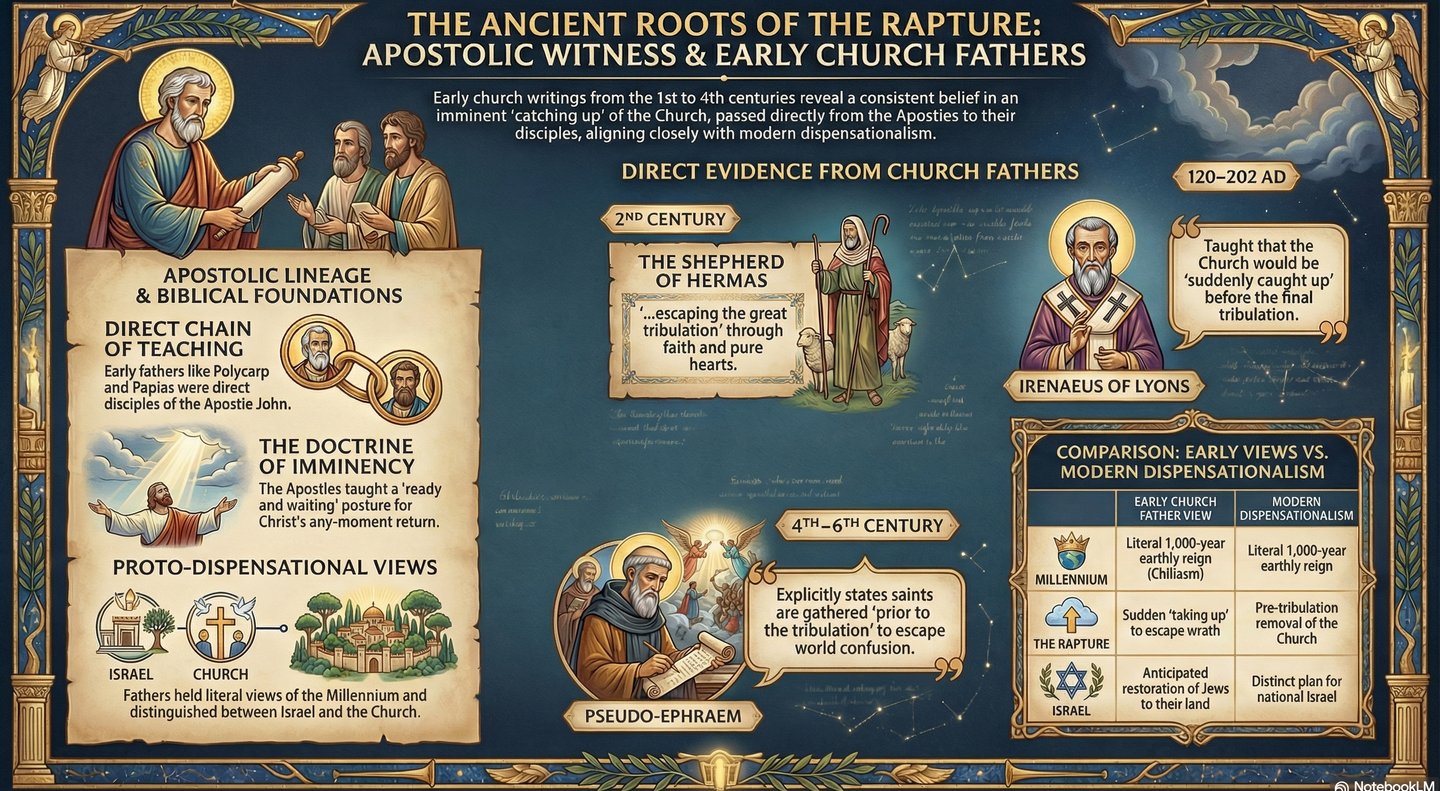
Is the Pre-Tribulation Rapture truly a 19th-century "innovation," or does it have deep roots in ancient Church history? In this episode, we tackle one of the most persistent objections to pretribulationism: the claim that the doctrine only emerged with J.N. Darby in 1830.
Drawing from primary sources, we uncover a trail of evidence for a distinct rapture event reaching back nearly two thousand years. We begin by defining our terms, tracing the word "Rapture" from the Latin rapiemur ("we shall be caught up") and the Greek harpazo.
In this episode, we discuss:
• The Apostolic Witnesses: How early writings like the Shepherd of Hermas (2nd Century) spoke of escaping the great tribulation through faith, and why scholars like Michael Svigel argue that the earliest readers understood 1 Thessalonians 4:17 as a literal future event.
• Irenaeus of Lyons: We analyze the famous statement from this 2nd-century Bishop regarding the Church being "suddenly caught up" prior to an unparalleled time of tribulation.
• The Medieval "Gap": We explore the "hidden" history of eschatology between the 5th and 15th centuries, including the fascinating case of Brother Dolcino (1304), who preached that the faithful would be transferred to Paradise to be preserved from the Antichrist.
• The Pseudo-Ephraem Sermon: A deep dive into a 4th–6th century text that explicitly states the saints are gathered together before the tribulation so they do not see the confusion overwhelming the world.
• 18th-Century Precursors: We look at Morgan Edwards, the founder of Brown University, who in 1744 developed a system featuring a rapture occurring three and a half years before the Millennium.
We also address the concept of "imminency" in the early church—the belief that Christ could return at any moment—and how this "seed" of pretribulationism existed even when other details of the timeline remained less defined.
Whether you are a student of Historic Premillennialism, Dispensationalism, or simply a history buff, this episode challenges the "1830 invention" narrative and offers a compelling look at the historical development of the Blessed Hope.
Join us as we explore why the argument that "no one taught this until 1830" is simply not historically true.
Marriage in Crisis: Reordering Love God’s Way


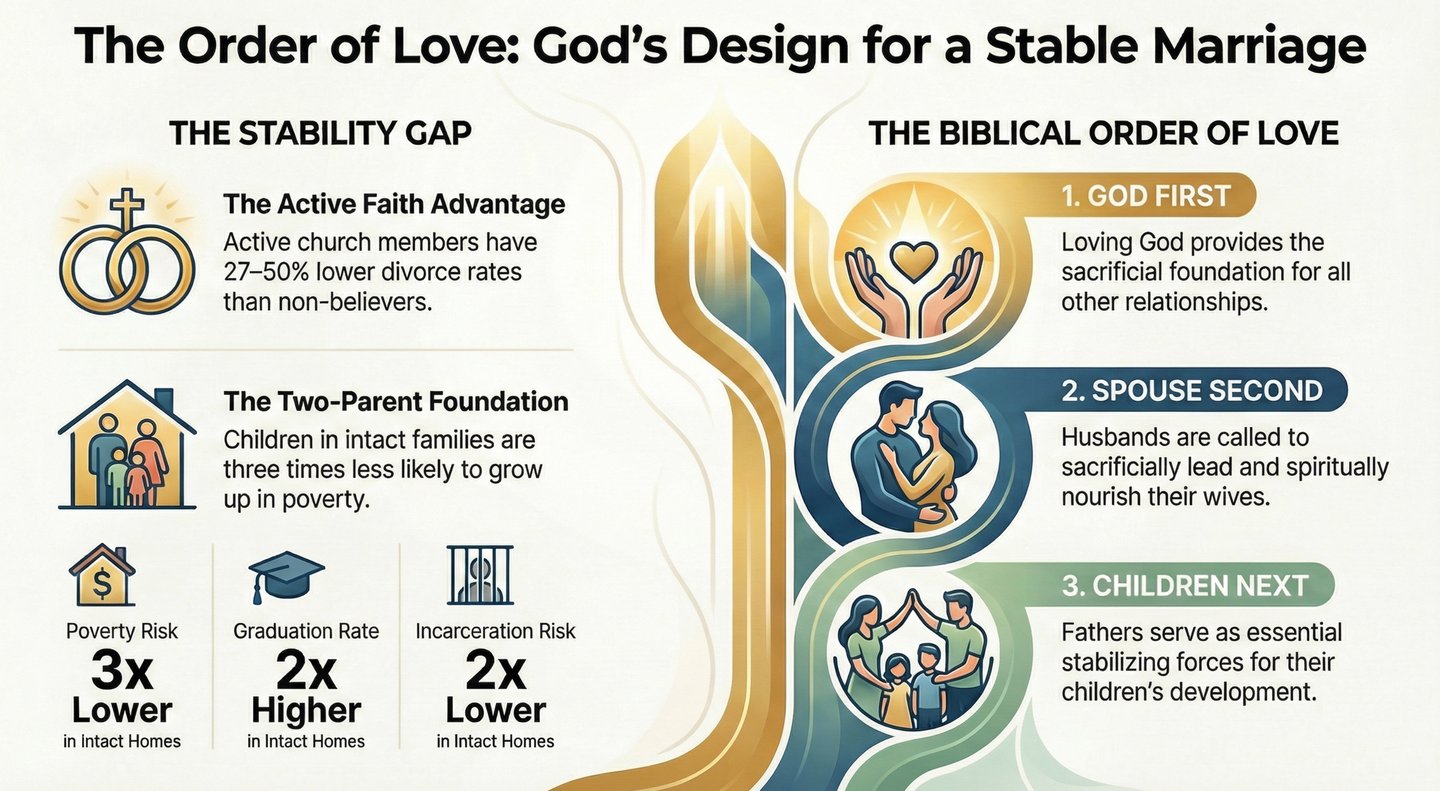
Why are marriages collapsing at historic rates—and why are children and society paying the price? In this episode, we examine how the breakdown of modern marriage is not merely cultural, but deeply spiritual. Drawing on biblical principles and real-world data, we explore how a lack of biblical knowledge and misplaced priorities have weakened the family structure.
We discuss compelling statistics showing how active church involvement dramatically lowers divorce rates and why intact families remain one of the strongest stabilizing forces in society. Central to the conversation is a biblical hierarchy of love: God first, spouse second, and children third—and how reversing this order leads to unintended harm.
Special attention is given to the vital role of fathers, whose call to sacrificial leadership and spiritual guidance is essential for healthy homes and emotionally stable children. This episode ultimately calls believers to recover a covenant-based vision of marriage rooted in Scripture, obedience, and enduring faithfulness.
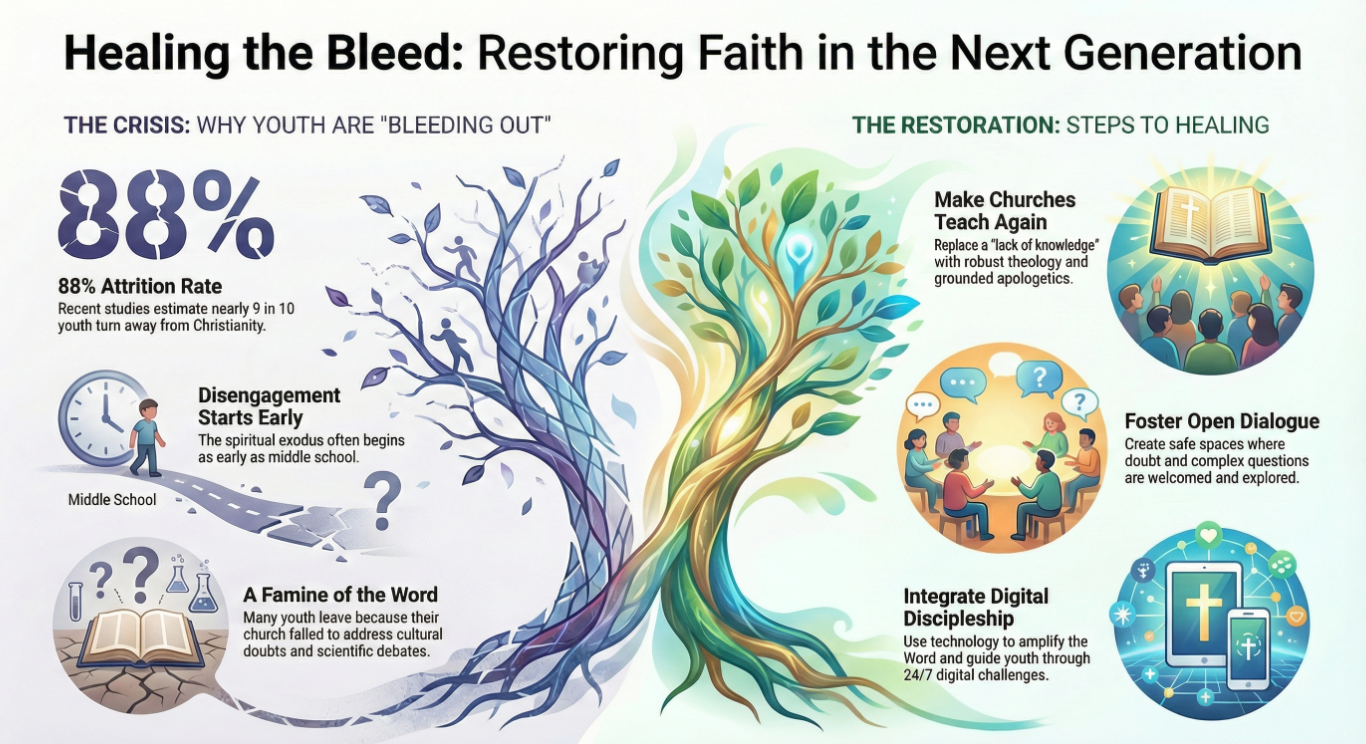
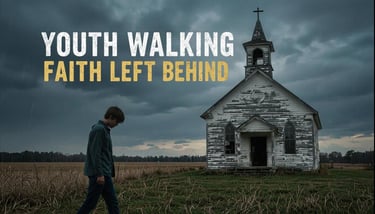
The Church Is Bleeding Out—Young Christians Are Leaving Now


Why are so many young Christians leaving the church—and often walking away from the Christian faith altogether?
In this video, we address the growing crisis of spiritual “bleeding out” among the next generation. Many young people disengage from church life even before college, not because they hate Christianity, but because they were never equipped with solid biblical teaching or meaningful answers to tough cultural, philosophical, and scientific questions.
We explore how shallow teaching, avoidance of hard questions, and the loss of intentional discipleship have left young believers vulnerable. Scripture calls the church to be a teaching church—one that forms minds as well as hearts.
By restoring robust biblical instruction, encouraging honest conversations, and pairing real mentorship with responsible online discipleship, the church can reconnect ancient truth with modern life.
This video is a call to pastors, parents, youth leaders, and Christians who care deeply about the future of the faith.
The next generation doesn’t need entertainment—they need truth, wisdom, and shepherds who will walk with them. There is hope, but only if we act now.
The Father Factor


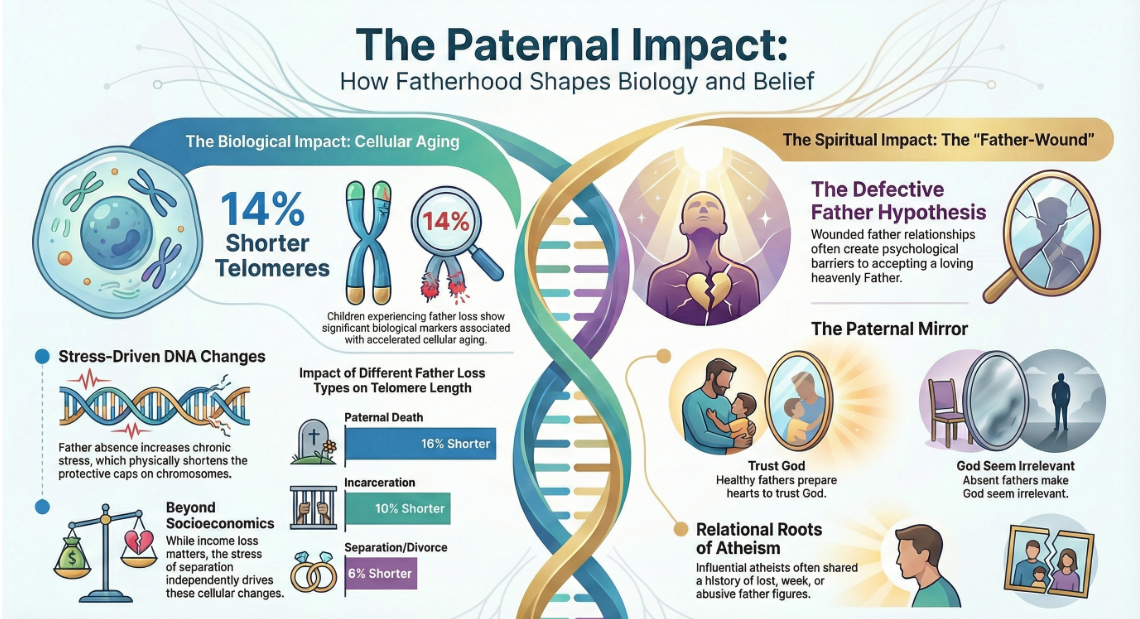
This podcast explores the "defective father hypothesis" proposed by Paul C. Vitz, which suggests that a person's earthly relationship with their father profoundly influences their openness to religious faith.
By analyzing the biographies of famous atheists, the author argues that absent or abusive fathers often create psychological barriers that prevent individuals from trusting in a heavenly Father.
Conversely, the podcast highlights how strong paternal bonds in the lives of influential Christian thinkers served as a foundation for spiritual belief.
The overarching message calls for the modern church to recognize these emotional wounds and provide spiritual mentorship to bridge the gap left by fatherlessness.
Ultimately, the source asserts that healthy fatherhood is a vital tool for generational faith and the restoration of community identity.
Bloodlines of Redemption: Tracing the Three Genealogies of Christ
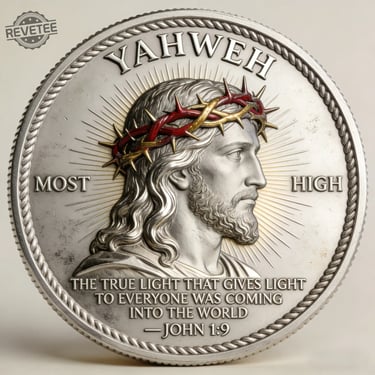
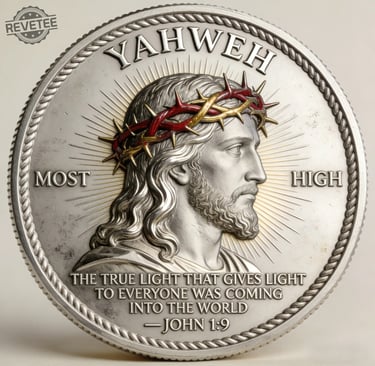
In this episode, we unravel the profound theological significance of the three major genealogies in Scripture: Genesis 5, Matthew 1, and Luke 3.
Each lineage offers a unique lens into God's redemptive plan, from Adam to Abraham, David to Jesus. We explore how these genealogies are more than historical records; they're spiritual roadmaps revealing the Messiah’s divine and human heritage.
Why does Matthew emphasize kingship?
Why does Luke trace all the way to Adam?
And how does Genesis foreshadow the coming Redeemer?
Join us as we follow the scarlet thread through generations, discovering how God's promises are fulfilled in Christ, the Son of Man and Son of God.


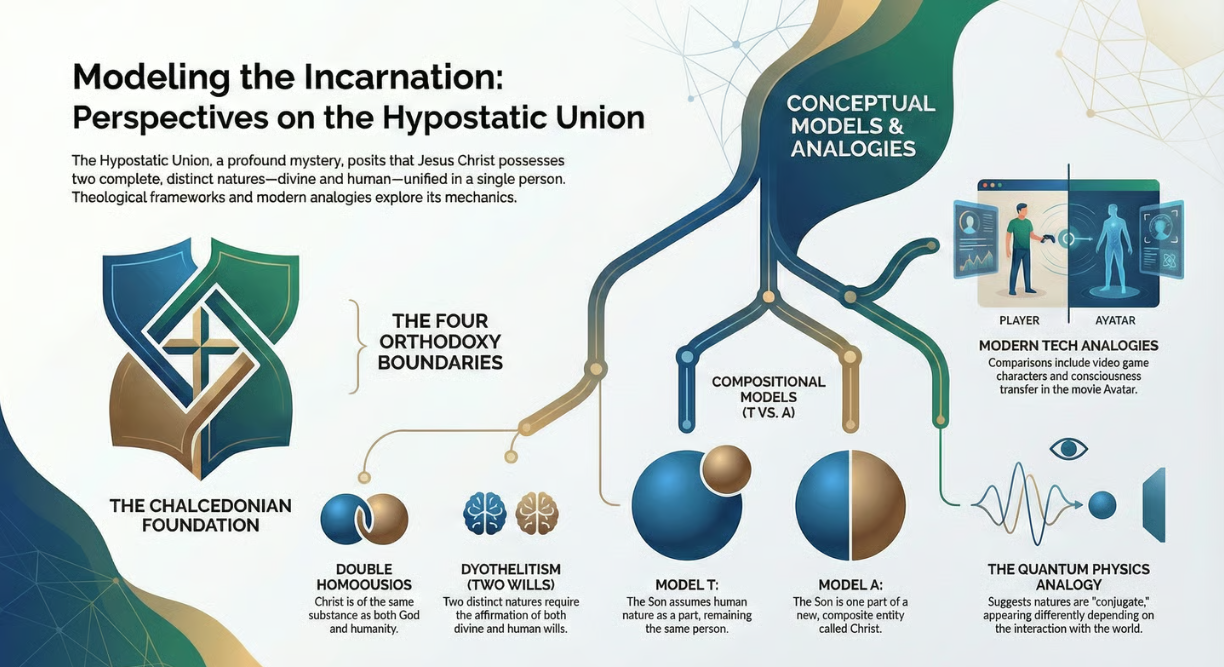
One Person, Two Natures: Exploring the Mystery of the Hypostatic Union
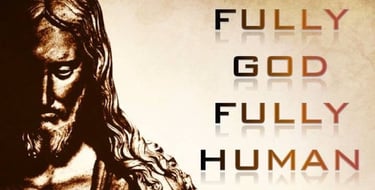
This episode examines one of Christianity’s most discussed beliefs: the idea that Jesus Christ is fully God and fully human in one person.
We talk about the important Chalcedonian Definition from history, then look at newer ways of thinking about it, such as Spirit Christology, different ways of understanding relationships and parts, and comparisons to quantum physics, video games, and Avatar.
Each view seeks to explain how Christ’s divine and human natures coexist without mixing, splitting, or weakening either. We examine what is good and what is missing in these ideas and show why the Chalcedonian standard remains the main guide for avoiding mistakes.
This episode encourages listeners to wonder at the mystery of the incarnation and better understand how thinkers over time have tried to explain it.
Faith with Reasons: Why Apologetics Matters


What does it mean to defend the Christian faith thoughtfully and biblically? In this episode, we look at apologetics as the rational defense of Christianity, based on Scripture and shaped by philosophy, history, and science.
We talk about how apologetics can clear away obstacles to belief, strengthen believers’ faith, and follow the biblical call to explain the reason for our hope. In the end, we show that apologetics is more than just an academic pursuit; it is a way to show love for truth and for people who are searching for answers.


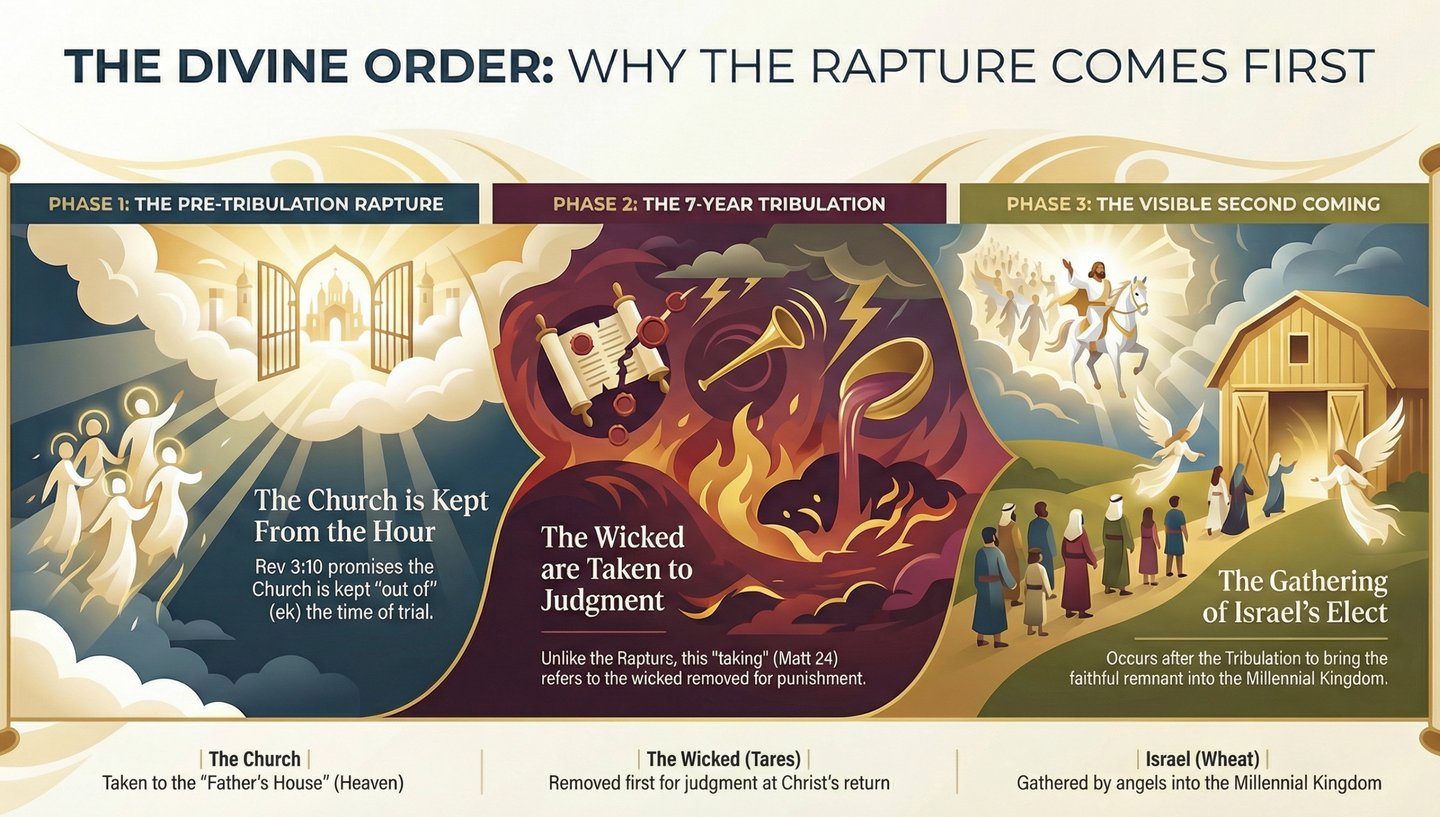
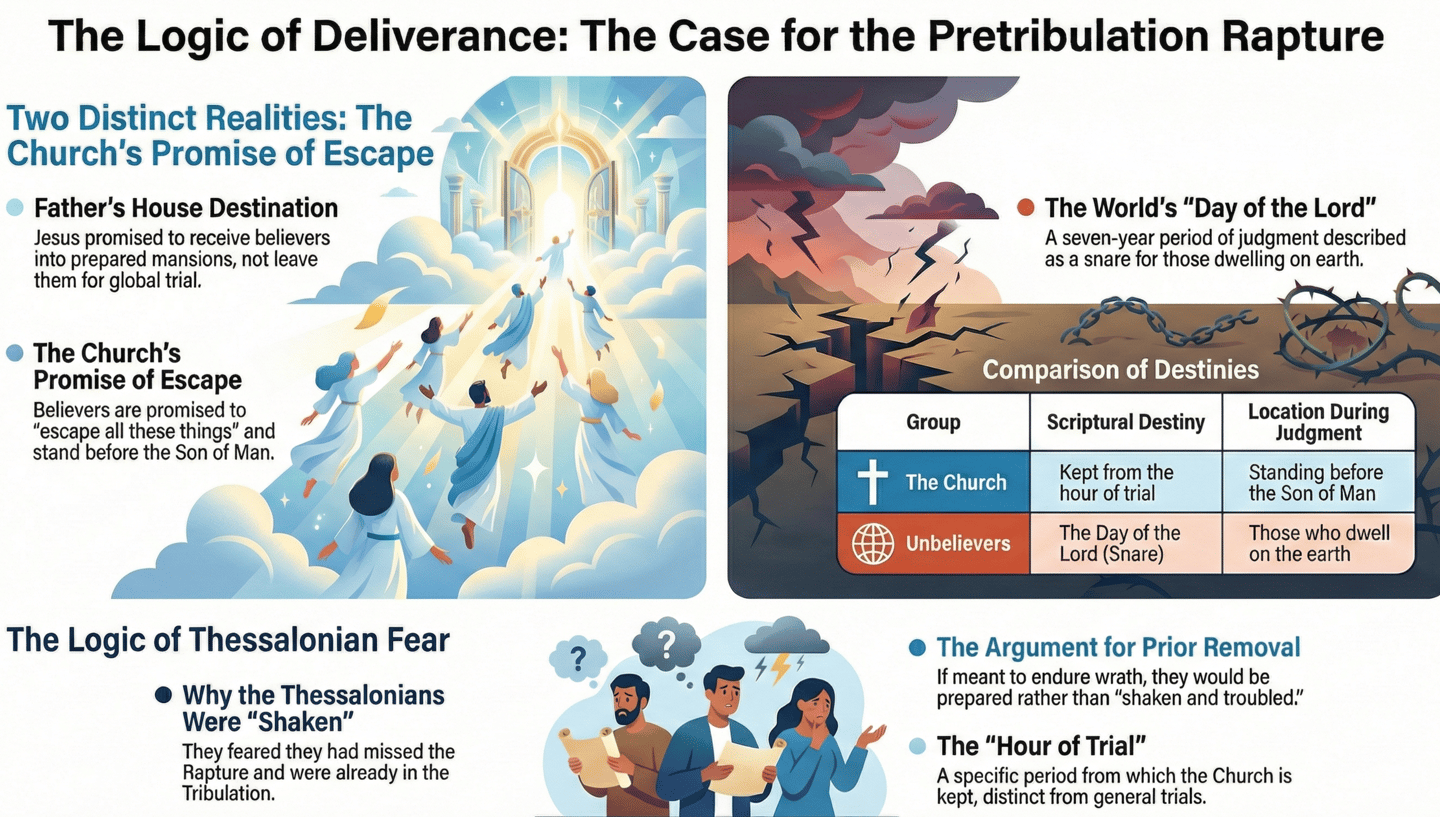
Why the Rapture Must Precede the Tribulation: A Biblical Case for the Church's Deliverance
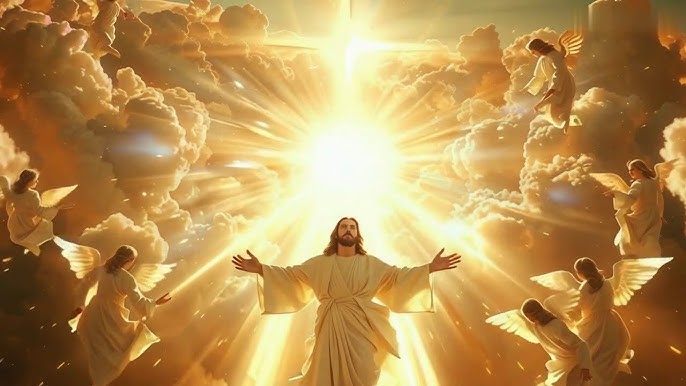
This podcast explores the Rapture of the Church and its ascension to Christ. It contrasts three views of the Rapture: pre-trib, mid-trib/pre-wrath, and post-trib.
This podcast will also clarify that the tribulation is God's wrath, that is, from the breaking of the seals to the pouring out of the bowls in the Book of Revelation.
It will also examine the promises of Revelation 3:10, Luke 21:36, and John 14:3.
This podcast also distinguishes the Church's removal from the world from the removal of the wicked in Matthew 24 and the gathering of the remnant of Israel in Mark 13.
The wheat-and-tares parable will be the final piece to put the three snatchings away into chronological order.


Does 2 Thessalonians 2 Disprove the Pre-Trib Rapture? A Biblical Response
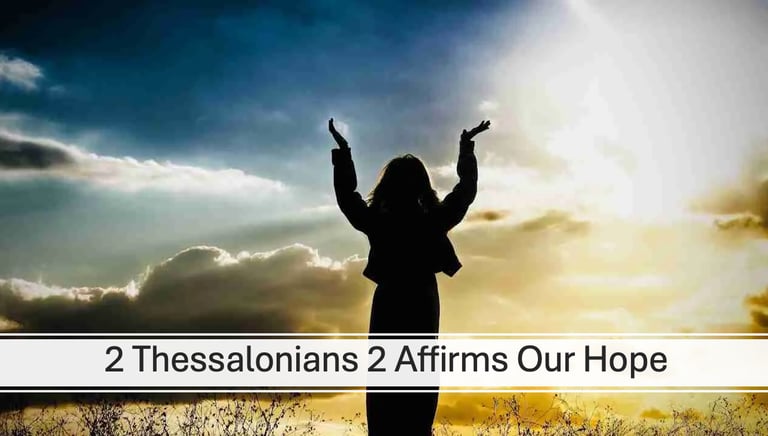
A common objection to the Pre-Tribulation Rapture is the claim that 2 Thessalonians 2:1–4 disproves it. In this teaching, we carefully examine that passage in its historical, theological, and biblical context to show what the apostle Paul is actually addressing, and what he is not.
Paul writes to believers who were shaken and troubled because they had been deceived into thinking the Day of the Lord (the seven-year Tribulation) had already begun. This podcast explains why Paul’s concern was not to redefine the Rapture, but to correct a false report that had led the Thessalonians to believe they were already in the time of God’s wrath.
In this podcast, we cover:
• The meaning of “the coming of our Lord Jesus Christ and our gathering together to Him.”
• Why the “Day of Christ” is synonymous with the Day of the Lord, not the Rapture
• How early Christian usage connects Old Testament judgment language to Christ
• Why the Thessalonians’ fear only makes sense if they expected deliverance
• Promises of escape found in Revelation 3:10, Luke 21:27–36, and John 14:1–3
• How these passages consistently support the Pre-Tribulation Rapture,
Rather than contradicting the Pre-Trib view, 2 Thessalonians 2 actually affirms it when read carefully.
The Church’s blessed hope remains the promise of being gathered to Christ before the outpouring of divine wrath upon the world. 📖 Key passages referenced: 2 Thessalonians 2:1–5, Revelation 3:10, Luke 21:27–36, John 14:1–3, 1 Thessalonians 4:16–17, Titus 2:13.
Thank you for watching. May the Lord bless you as you study His Word.
Faith Under Fire: Answering Doubt with Scripture, Evidence, and Reason


In an age of growing skepticism and spiritual disengagement, many believers, especially the next generation, are walking away from the church with unanswered questions.
In this episode, we explore powerful resources that confront the modern crisis of faith head-on.
From comprehensive databases addressing tough theological and biblical questions, to urgent analyses of why young people are leaving the church, to investigative and forensic approaches that affirm the reliability of the Gospels and the reality of God, this discussion highlights the need for a faith that is both taught and tested.
Join us as we make the case for rigorous discipleship, intellectual engagement, and a reasoned Christianity that can withstand cultural pressure and personal doubt.

Contact Us
Reach out for inquiries about our theological video content.